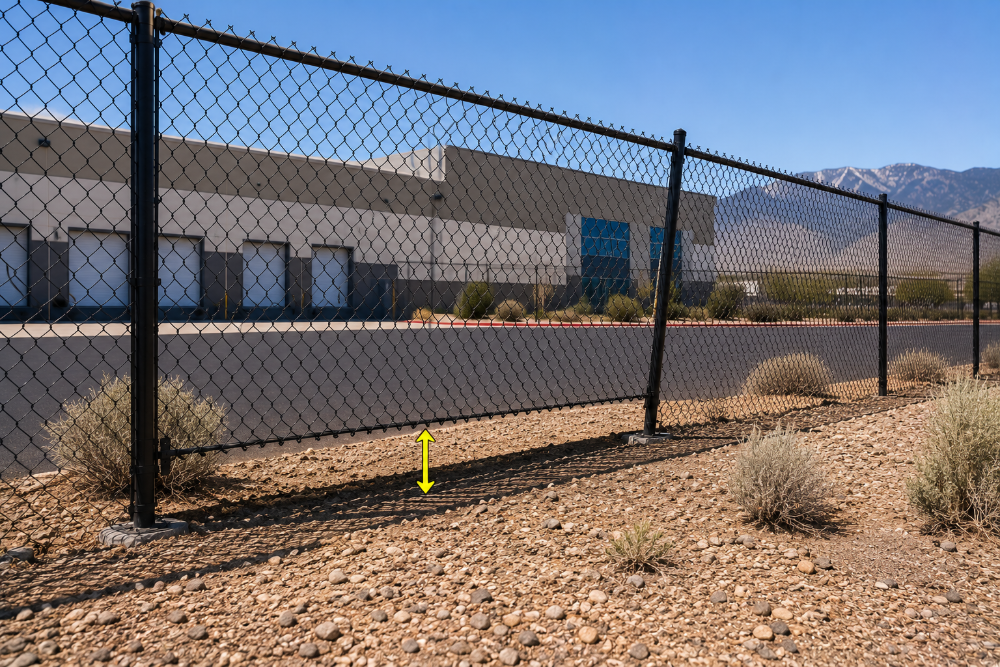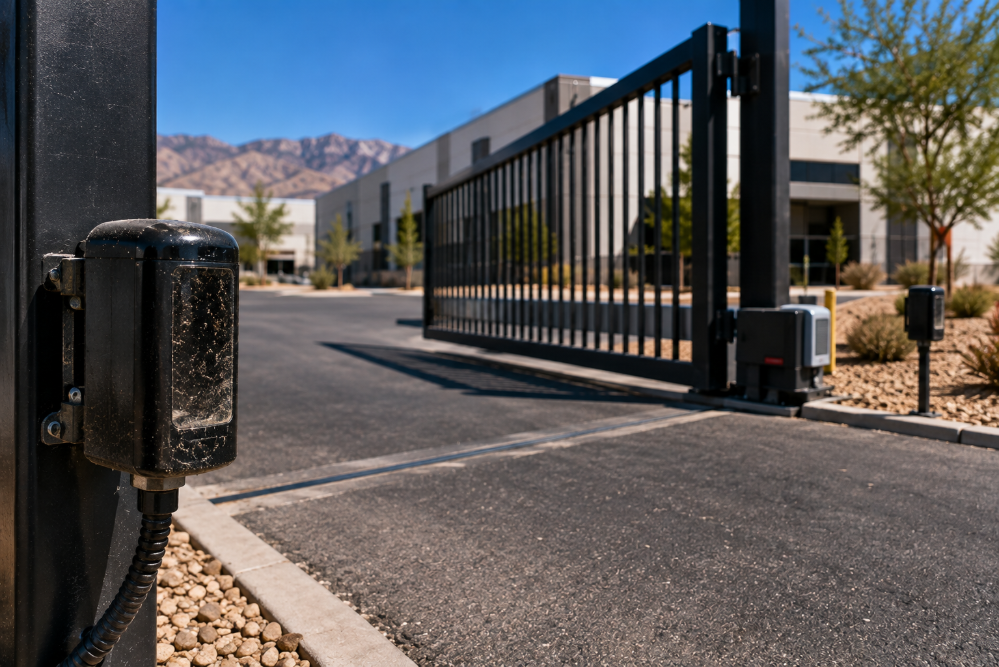
When an automatic gate refuses to close, stops halfway through its cycle, or reverses for no apparent reason, the safety sensors are usually the first place to look. These devices exist to detect obstructions and protect people, vehicles, and the gate itself. When they malfunction or the system believes they have, the gate responds by refusing to operate normally.
Understanding why safety sensors fail helps property owners recognize what they are dealing with and whether the issue is something they can address or something that requires professional attention. In Las Vegas, the combination of dust, intense sun, and extreme heat creates conditions that stress these systems in specific ways. For a deeper look at automatic gate systems and how they work together, that context helps frame what follows here.
What Safety Sensors Actually Do
Before getting into failure causes, it helps to understand the job these sensors are performing.
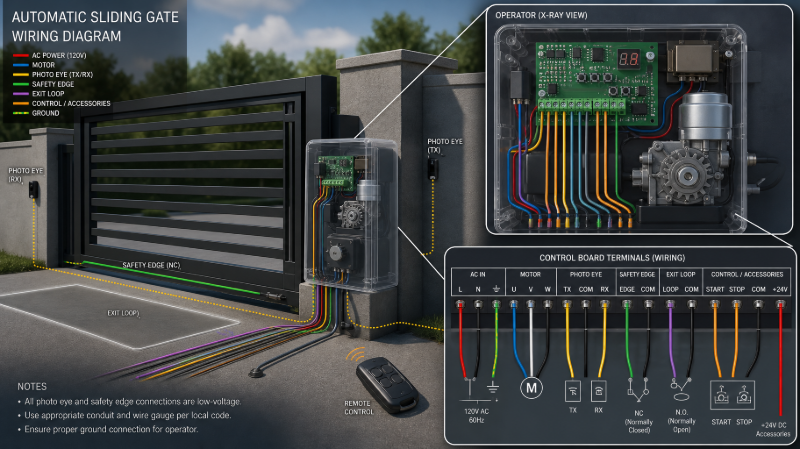
Photo eyes use an infrared beam between a transmitter and receiver mounted on opposite sides of the gate opening. When the beam is unbroken, the system knows the path is clear. When something blocks it, the gate stops, reverses, or refuses to close.
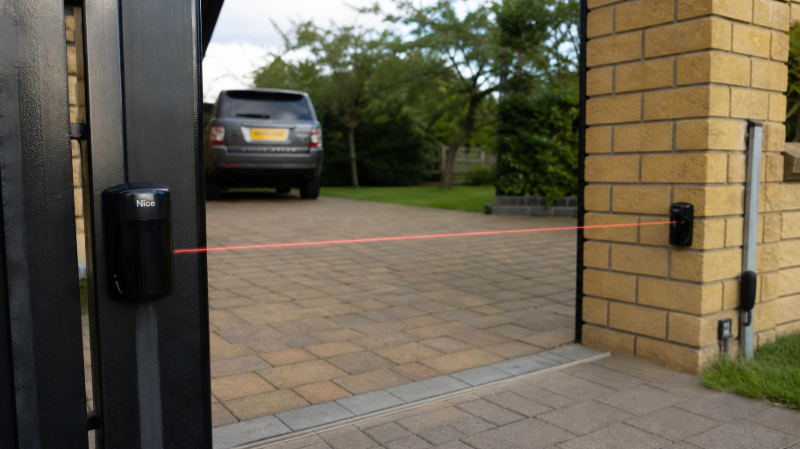
Safety edges are contact sensors mounted on the leading edge of the gate panel itself. If the gate contacts an obstruction, the edge compresses and signals the operator to stop or reverse.
Some systems include additional devices like loop detectors embedded in the driveway or wireless safety sensors. All of these feed information back to the control board, and any input interpreted as unsafe will hold the gate open or interrupt its travel.
Dirty or Obstructed Lenses
This is one of the most common reasons photo eyes stop working correctly, and in Las Vegas it happens faster than in milder climates.
Dust, fine sand, and road grime accumulate on sensor lenses over time. When buildup gets heavy enough, the infrared beam weakens or gets blocked entirely. The system reads this as a constant obstruction and the gate will not close.
Spider webs are another frequent culprit. Small insects, leaves, and organic debris can sit directly over the lens or hang in the beam path. The gate behaves as though something is blocking the opening because, from the sensor’s perspective, something is.

After rain or irrigation, water spots and splashed mud can fog the lens. In areas with hard water, calcium and mineral film builds up over time if sprinklers routinely hit the sensor posts.
The symptom pattern is consistent. The gate either refuses to close at all, or it closes partway then immediately reopens. The operator may display a sensor fault code or photo eye blocked status.
Cleaning the lenses with a soft, lint free cloth is the standard first step. In Las Vegas, this needs to happen more frequently than the manufacturer’s baseline maintenance schedule assumes.
Misalignment
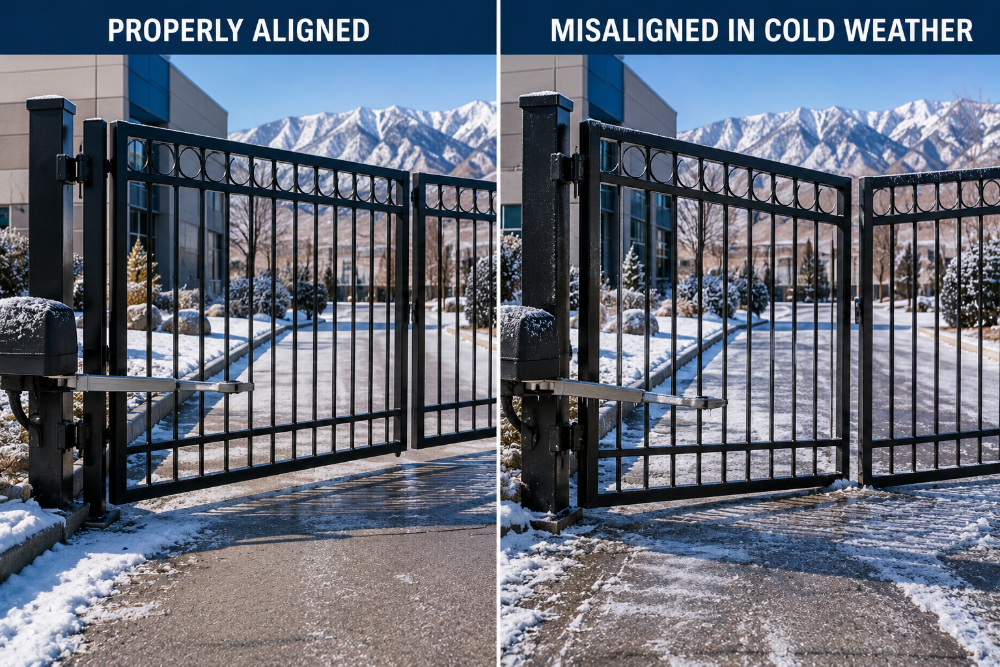
Photo eyes have to see each other directly. Even small misalignment can look like a constant blockage to the system.
Sensor housings get bumped by vehicles, people, weed trimmers, or trash bins being moved through the gate opening. Mounting brackets loosen over time, allowing slow drift. Posts can shift slightly from soil movement or physical impact.
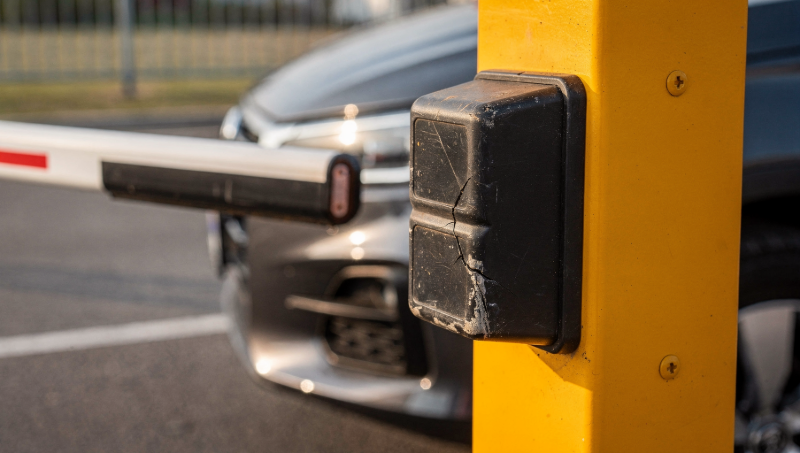
When alignment drifts, the gate refuses to close, stays open, or reverses as soon as it starts moving. Many sensors have LED indicators that show alignment status. A solid light typically means aligned. Blinking or color changes usually indicate the beam is not connecting properly.
In Las Vegas, the large daily temperature swings cause expansion and contraction in posts and hardware. Brackets that were tight during installation can gradually loosen, and alignment that was perfect in winter may drift by summer.
Checking alignment involves confirming that both sensors face each other directly, using the LED indicators as a guide. Loosening the brackets, adjusting the angle until the LED shows solid alignment, then retightening usually resolves the issue if misalignment is the cause.
Sunlight Interference
Infrared photo eyes can be overwhelmed by direct sunlight hitting the receiver lens at certain angles. The sun effectively blinds the receiver, making it behave as if the beam is blocked even when the path is clear.
This problem is often time of day dependent. The gate works fine in the morning but faults in the afternoon, or vice versa. Sensor alignment and cleanliness check out, but the fault persists when the sun hits the receiver directly and disappears when shaded.
In Las Vegas, this is more than an occasional nuisance. Intense, sustained sunlight is a daily reality, and installations facing south or west are particularly vulnerable during certain hours. If the problem follows a predictable pattern tied to sun position, interference is the likely cause.

Field workarounds include using a small shield to block direct sun from the receiver while testing, or repositioning the sensors slightly so the sun does not strike the lens directly during critical times. On new installations, sensor placement should account for sun angles throughout the year.
Physical Obstructions in the Beam Path
Sometimes the sensors are working exactly as designed, but the environment creates constant obstruction conditions.
Rocks, sticks, leaves, or blown trash sitting in the line between the two photo eyes will prevent the gate from closing. Landscaping growth can creep into the beam path over time. Parked vehicles, trailers, bins, or stored items anywhere in the sensor’s line of sight will trigger the same response.
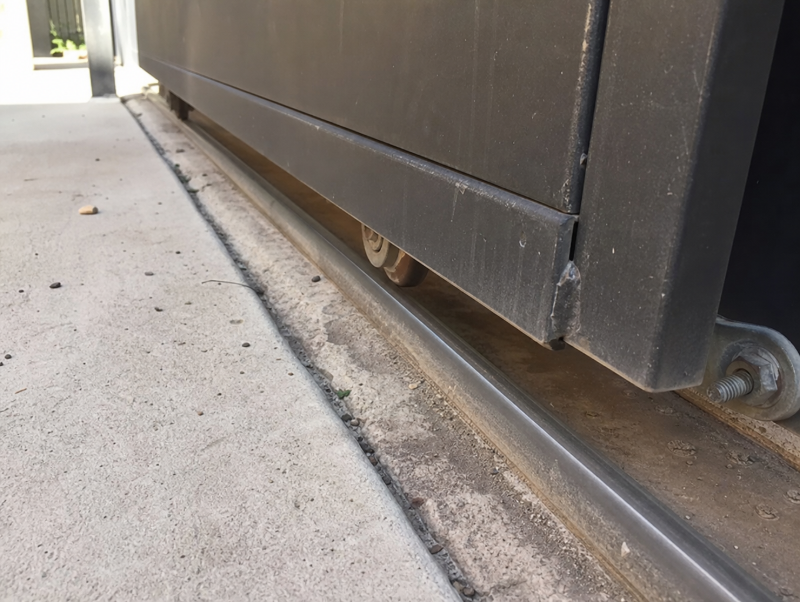
For slide gates, debris in the track can cause the gate to hit resistance and stop or reverse. The symptom looks like a sensor problem, but the actual issue is mechanical.
In Las Vegas, wind can blow lightweight debris repeatedly into the sensor path. Tumbleweeds, plastic, and cardboard are common offenders. Sparse landscaping can sometimes hide obstructions near the posts until the gate behavior forces closer inspection.

The fix is simple in concept: clear the beam path. But on properties where wind routinely deposits debris, this becomes part of ongoing maintenance rather than a one time correction.
Wiring Problems and Power Issues
Even when lenses are clean and aligned, sensors stop working when they lose stable power or signal.
Rodents and pests chew through low voltage wiring or nest inside sensor housings. Loose connections at terminal blocks, junction boxes, or splices interrupt the circuit. Cable insulation breaks down from UV exposure or vehicle impact. Wireless safety sensors stop responding when their batteries die.
The symptom pattern here differs from lens and alignment issues. Sensor LEDs may be dead or flickering even after cleaning and alignment. Some sensors make an audible click when the beam is blocked, and absence of that click suggests a power or signal problem rather than an obstruction issue.
In Las Vegas, UV exposure and sustained heat accelerate insulation cracking and connector corrosion. Pests seeking shelter in warm, quiet housings are a recurring problem. Spiders and insects frequently contribute to both wiring damage and lens contamination.
For wireless safety devices, replacing batteries and resealing covers to prevent water or debris entry is standard maintenance.
Sensor Hardware Failure
Sensors have finite lifespans. Internal components can fail outright after years of exposure and cycling.
Water intrusion through cracked housings, failed gaskets, or unsealed cable entries damages internal electronics. Physical impact from vehicles hitting posts, vandalism, or severe weather can destroy the sensor entirely. LEDs, receivers, and internal relays simply wear out over time.
When a sensor has power but shows no response when the beam is blocked, or when the gate behaves as if a sensor is permanently blocked despite all cleaning and adjustment checks passing, hardware failure is the likely cause.
In Las Vegas, thermal cycling stresses seals and plastics, increasing the chance of hairline cracks and slow water ingress from occasional rain or irrigation overspray. Prolonged heat shortens component lifespan.
At this point, replacement rather than adjustment is usually necessary.
Control Board and Settings Interactions
Sometimes the sensors are functioning correctly, but the operator’s logic or sensitivity settings cause apparent sensor failure.
Obstruction force settings calibrated too sensitively can cause the gate to stop or reverse under normal operating load. A slight drag in a slide gate track triggers the same response as a sensor detecting an obstruction.
Incorrect wiring of sensors to the control board, particularly mixing up normally closed and normally open contacts or connecting to the wrong terminals, can produce constant fault readings even with healthy sensors.
Limit switches or position references out of adjustment make the operator think it has hit an obstruction partway through travel. Some control boards latch sensor faults until power is cycled or the fault is manually cleared.
The symptom here is confusing: sensor LEDs indicate normal operation, but the operator still reports a safety input fault. The issue temporarily clears after cycling power, then returns.
In Las Vegas, heat related voltage sag or marginal backup batteries can exaggerate how the control board interprets sensor inputs under load.
Recognizing the Patterns
Across all these failure modes, the gate behavior falls into recognizable patterns.
A gate that will not close at all typically points to blocked or misaligned photo eyes, dead sensors, serious wiring faults, or a constant obstruction input.
A gate that closes partway then stops and reverses is commonly tied to obstruction sensing issues, including misaligned photo eyes, dirty lenses, debris in the track, or over sensitive force limits.
A gate stuck open suggests sensor faults holding the safety circuit in a fault state, something in the beam path, or wiring issues preventing the operator from accepting a close command.
Intermittent operation, where the gate sometimes works and sometimes does not, points to marginal alignment, sun interference, loose wiring, or unstable power.
When Professional Diagnosis Makes Sense
Many sensor issues can be identified through basic inspection, cleaning, and alignment checks. But some situations require more involved diagnosis.
If all visible checks pass and LEDs indicate proper operation, but the gate still will not close or faults intermittently, the issue may be inside the control board logic, the wiring between sensors and operator, or the sensor hardware itself.
If symptoms track with temperature extremes, appear only under load, or involve multiple sensors behaving erratically, the interaction between components may need professional evaluation.
For systems that have been in service for years in harsh conditions, distinguishing between marginal performance and actual failure often requires testing beyond what basic inspection reveals.
Working With Las Vegas Conditions
Safety sensors on automatic gates in Las Vegas face a combination of stresses that accelerate failure modes and compress maintenance intervals.
Dust and fine debris require more frequent lens cleaning. Intense sunlight makes sensor placement and orientation a design consideration, not an afterthought. Heat driven expansion and contraction loosen mounting hardware and push alignment out of spec over time. UV exposure degrades wiring insulation faster than in milder climates. Pests seeking shelter in warm housings create both contamination and wiring damage.
Treating sensors as part of the whole gate system, including the operator, wiring, control logic, and mechanical components, helps identify problems faster than focusing on the sensor in isolation.
For property owners dealing with sensor issues or planning maintenance on an existing system, A1 Fence LV works with automatic gate systems throughout Southern Nevada. If you are trying to sort out why a gate is misbehaving or whether repair or replacement makes more sense, submitting a quote request online at https://a1fencelv.com/request-a-quote is the simplest way to start that conversation. You can also call (702) 904-5998 or email zac@a1fencelv.com.