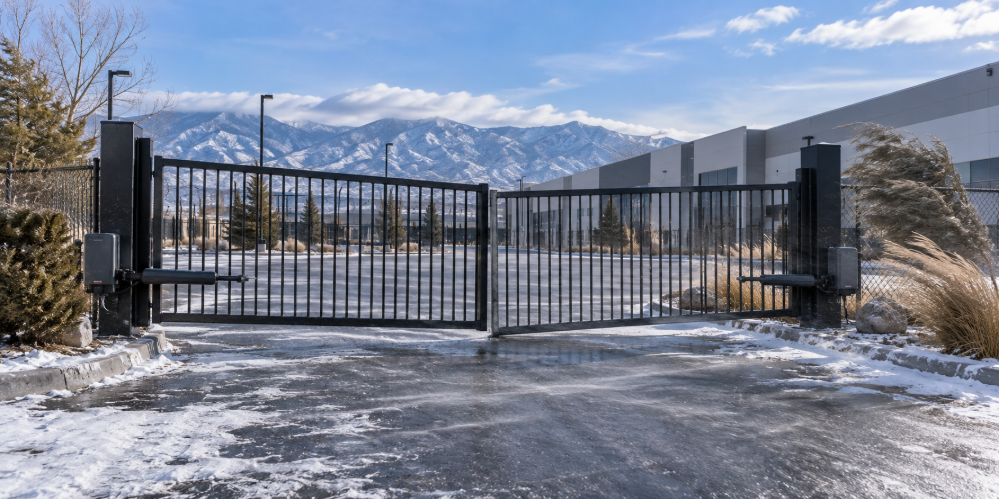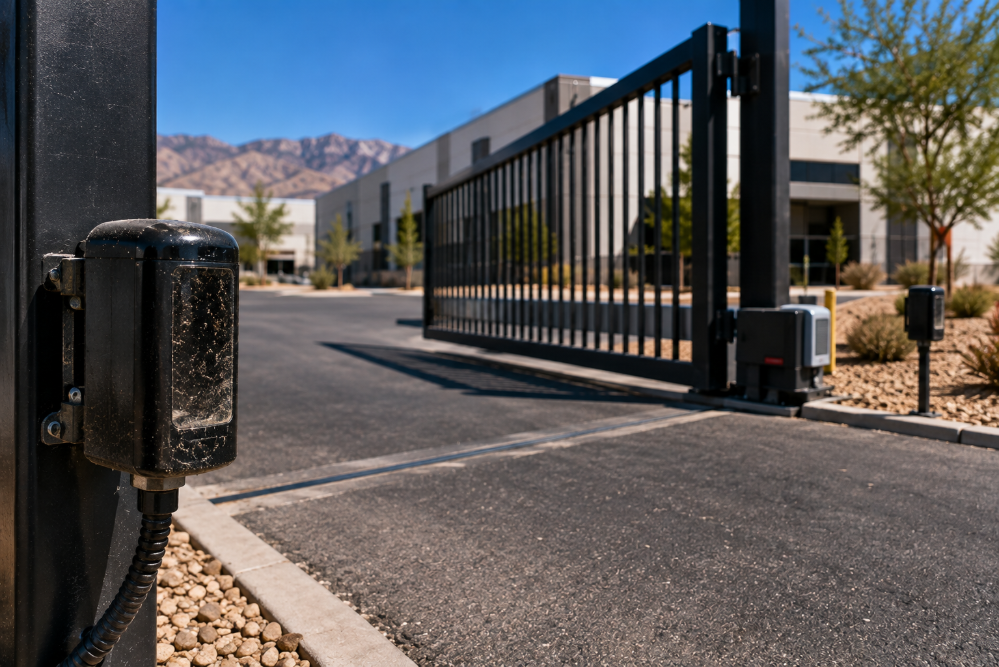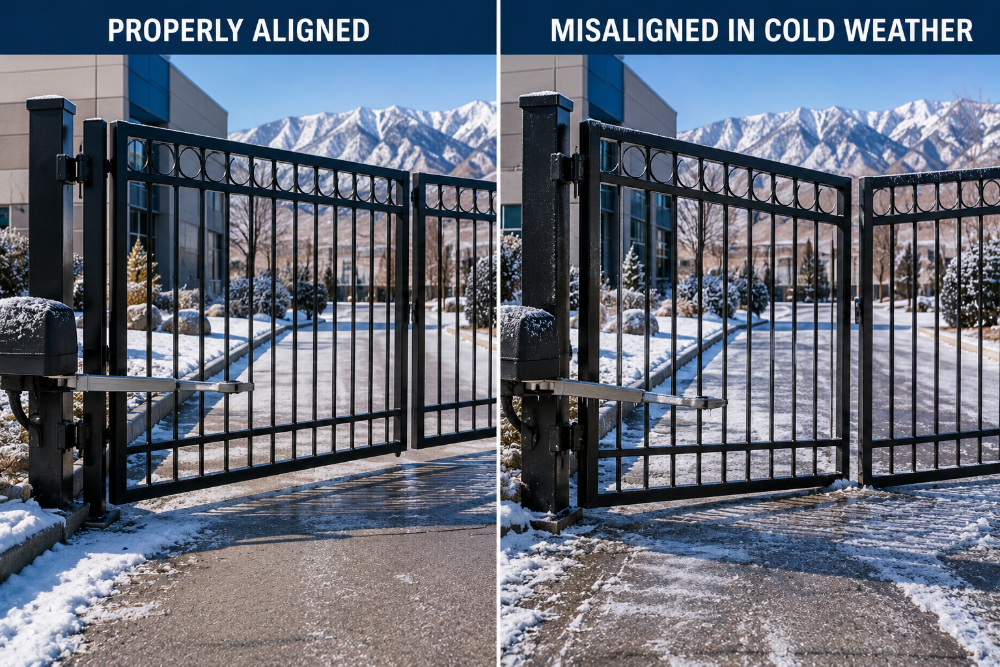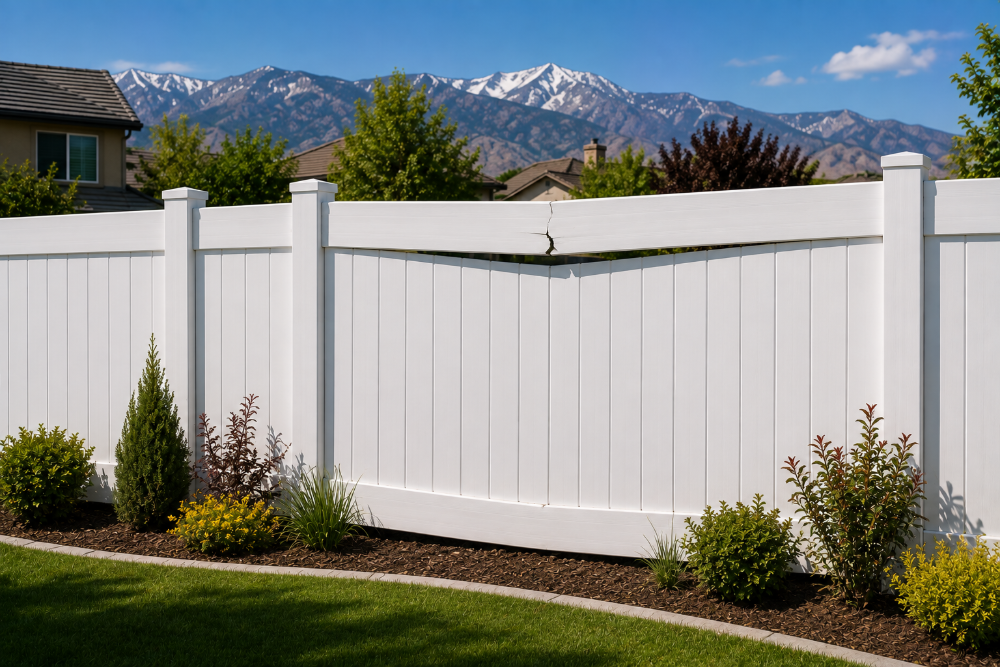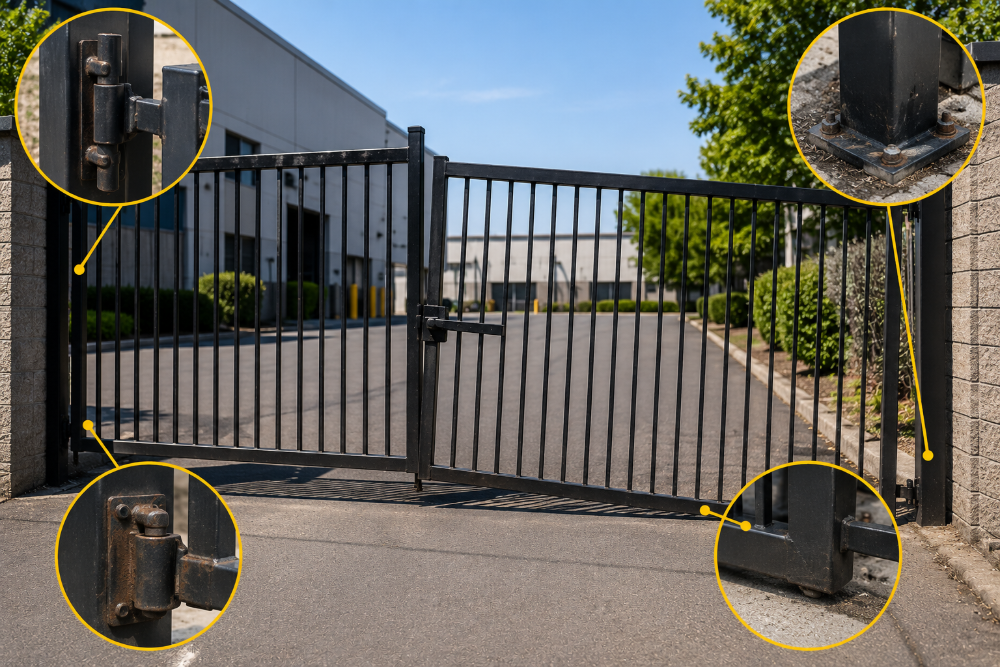
Gate sag usually doesn’t happen overnight. It’s a structural issue that develops gradually as the gate, hinges, posts, and operator handle thousands of opening and closing cycles over the years. In Reno and throughout Northern Nevada, changing seasons, strong winds, freeze-thaw cycles, and shifting soil all contribute to that wear. Understanding what causes gate sag makes it easier to recognize the warning signs before a small alignment problem turns into an expensive repair or a gate that no longer operates safely.
When Your Gate Stops Working the Way It Used To
Most property owners remember when their automatic gate operated smoothly. It opened without hesitation, lined up with the latch every time, and closed the way it was supposed to. Then, little by little, things begin to change. One corner starts rubbing the driveway. The latch only catches if someone gives the gate a slight push. The operator sounds like it’s working harder than it used to, and occasionally the gate stops partway through a cycle or leaves a gap that wasn’t there before.
That gradual change is what makes gate sag frustrating. Nothing appears to fail all at once. Instead, the entire system slowly falls out of alignment, making it difficult to determine whether the problem is with the operator, the hinges, the posts, or simply years of use catching up with the gate.
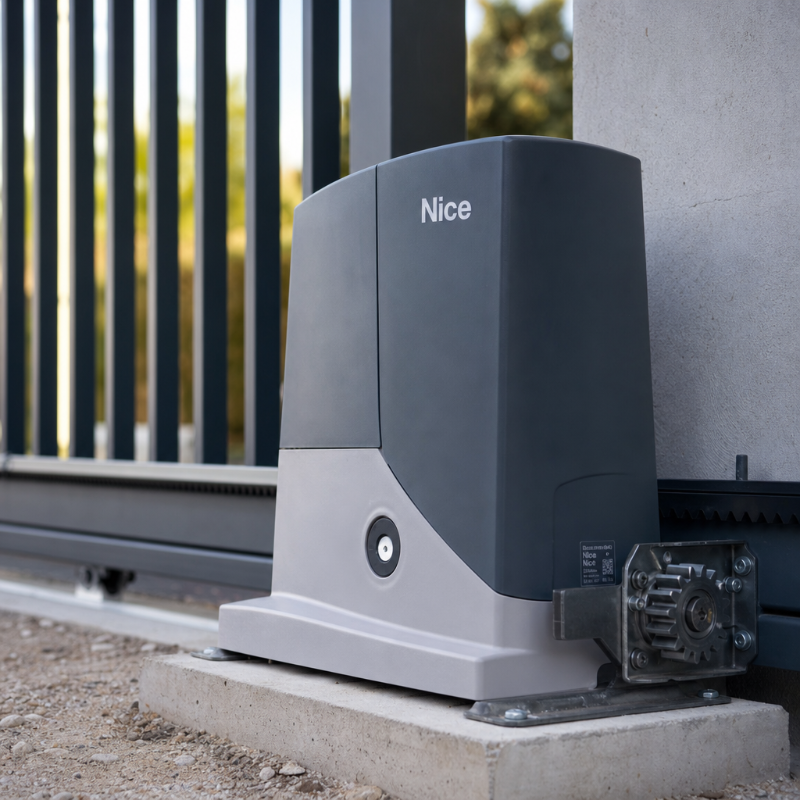
For commercial properties, apartment communities, industrial facilities, and shared entrances throughout Reno, those changes become more than just an inconvenience. A gate that no longer operates consistently can interrupt deliveries, frustrate tenants, create unnecessary service calls, and eventually become a safety or security concern. What was originally installed to improve access control begins demanding attention every time someone enters or leaves the property.
What Gate Sag Actually Means in Practice
Gate sag describes what happens when the gate gradually drops, twists, or shifts enough that it no longer lines up with the latch, receiving post, or track the way it did when it was first installed. In day-to-day operation, it usually shows up as scraping, binding, uneven gaps, difficulty latching, or additional strain placed on the automatic operator.
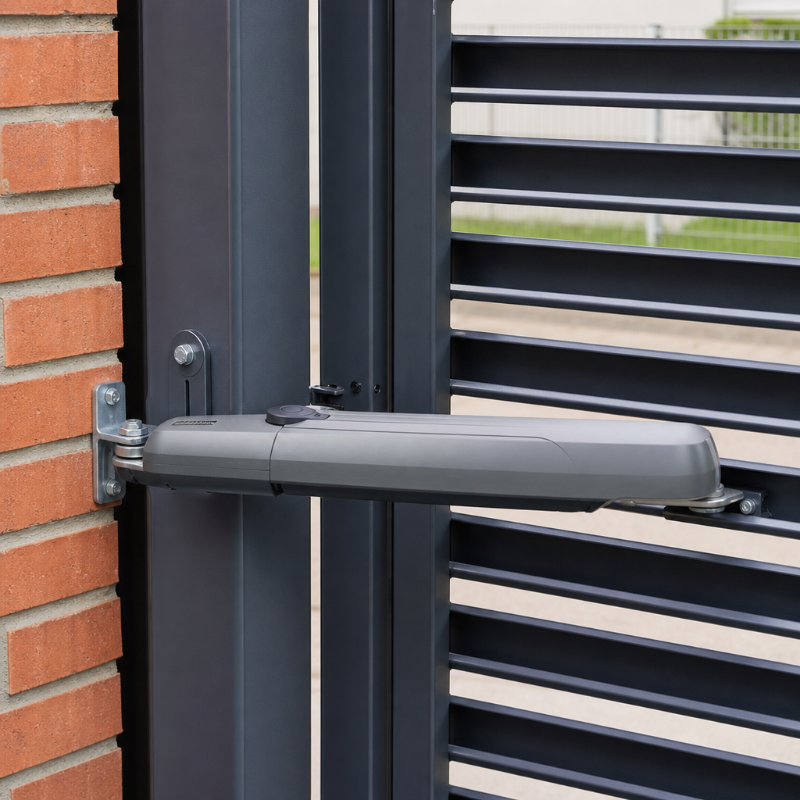
With swing gates, sag develops because weight, leverage, and constant movement all work against the hinge side of the gate. Over thousands of cycles, hinge posts can begin leaning slightly, hinges can loosen or wear, and welds may begin showing signs of fatigue. If the gate frame was not properly braced for its size and weight, it can slowly twist under its own load. Even small amounts of movement become noticeable once the operator is expected to move the gate through the exact same path every time.
Gate sag is not always caused by the hinges alone. Weak support posts, inadequate footings, loose mounting hardware, and excessive flex in the gate frame can all allow a gate leaf to drop out of alignment. DASMA notes that gates with excessive flex or sag can also place additional strain on automatic gate operators and contribute to ongoing performance problems.
Sliding gates experience many of the same problems, although they usually appear differently. Instead of dropping at the hinge side, the frame may begin sagging in the middle, the rollers may no longer travel smoothly, or the gate may bind at certain points along the track. These problems often trace back to track alignment, roller wear, settling foundations, or movement in the support posts rather than the gate itself.
Automatic gates tend to reveal structural problems sooner than manual gates because the operator repeats the same motion every time the gate cycles. A slight alignment issue that might go unnoticed for years on a manually operated gate becomes much more obvious once an automatic operator begins applying consistent force several times each day. The operator simply continues pushing through the same path, placing repeated stress on components that are no longer perfectly aligned.
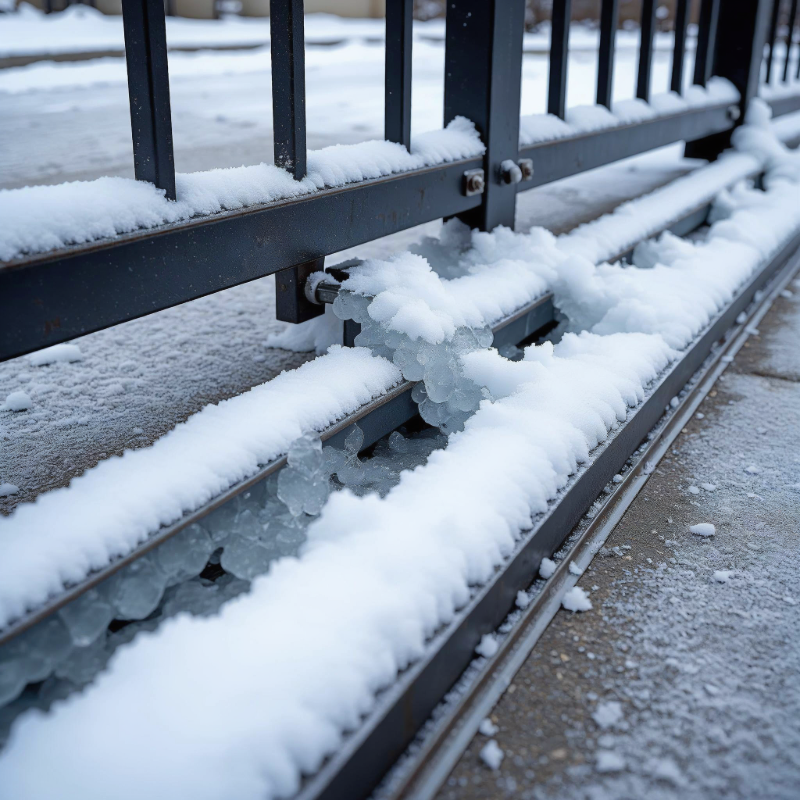
Northern Nevada’s climate can speed up that process. Winter freeze-thaw cycles cause the ground around post footings to expand and contract. Strong seasonal winds place additional pressure on larger gate panels, particularly on commercial properties with wide entrances. Snow accumulation adds temporary weight, while spring soil movement can shift posts just enough to affect alignment. Over time, those environmental factors combine with everyday use to create the structural changes that eventually show up as gate sag.
Why Sag Matters for Reliability, Safety, and Cost
One of the first things property owners notice when a gate begins to sag is that it stops operating consistently. The latch no longer lines up the way it should. The operator starts stopping during its cycle or reversing because it senses additional resistance. Before long, tenants, employees, or staff begin working around the problem by forcing the gate closed, overriding the operator, or leaving it open altogether. At that point, the automatic gate is no longer providing the convenience or security it was installed to deliver.
Beyond reliability, gate sag can also affect safety. Automatic gate systems are designed with photo eyes, sensing edges, and other safety devices that are calibrated based on the gate’s intended path of travel. As the gate settles or shifts out of alignment, those clearances change. The operator may begin seeing higher loads during opening and closing, and safety devices may no longer function exactly as they were originally intended. A gate that drags, binds, or closes unevenly isn’t simply showing signs of age. It’s an indication that the system is no longer operating under the same conditions it was designed and tested for.
The additional stress doesn’t stop at the operator. Hinges carry uneven loads, brackets experience greater force, and welds absorb more movement than they were designed for.
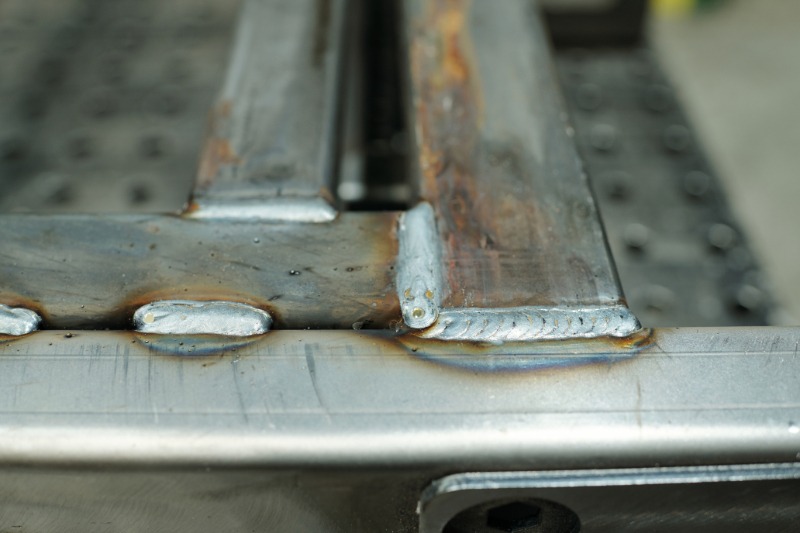
Instead of distributing weight evenly throughout the structure, the gate begins concentrating that force in a handful of components. Eventually, those components wear prematurely, leading to repairs that could have been avoided if the alignment issue had been addressed earlier.
From a cost standpoint, catching sag early almost always leads to a simpler repair. A small adjustment or reinforcement today can prevent much larger structural work later. Once posts begin shifting significantly or the frame itself starts twisting, repairs often become more involved and more expensive. On commercial properties where gates cycle dozens or even hundreds of times each day, deferred maintenance tends to accelerate those costs much faster than most owners expect.
Reno’s seasonal weather only adds to the equation. Freeze-thaw cycles, strong winds, and gradual soil movement all contribute to hardware loosening and post movement over time. These local conditions affect how long a gate stays aligned and how often it should be inspected. Understanding that reality helps property owners plan maintenance before minor structural changes become major repair projects.
Common Misunderstandings That Make Sag Worse
One of the biggest misconceptions is that gate sag is simply a matter of adjusting the hinges or reprogramming the operator. While those adjustments may temporarily improve how the gate operates, they rarely address the actual cause. Most sag develops because the structure itself has moved. The posts may have shifted, the frame may have begun twisting, or the hinges may have worn under years of uneven loading. Until those underlying issues are corrected, the symptoms almost always return.
Another common assumption is that an automatic operator will compensate for a gate that’s slightly out of alignment. In reality, the opposite is usually true. The operator continues applying force through the exact same path every time the gate cycles. If the frame flexes, the posts lean, or the hinges are beginning to fail, the operator repeatedly drives those weak points until the problem becomes impossible to ignore. What may have taken years to notice on a manual gate can become much more apparent once automation is added.
Some property owners also view sag as a cosmetic issue that can wait until it becomes severe. Unfortunately, even small changes in alignment can affect how consistently the gate latches, how smoothly it travels, and how accurately its safety devices function. A gate that only drops half an inch may still place significantly more stress on the operator than it did when everything was properly aligned.
Another misunderstanding is that simply building a heavier gate prevents sag. Additional steel can certainly increase strength, but weight alone doesn’t solve the problem. The hinges, posts, footings, and bracing all have to be engineered to support that weight over thousands of operating cycles. A heavy gate supported by undersized hinges or shallow post foundations can develop structural problems faster than a properly designed lighter system.
Many of the most difficult repairs involve gates that were originally built for manual operation and later converted to automatic systems. While adding an operator is sometimes appropriate, older gates often lack the structural reinforcement needed for powered operation. Once automation is added, the additional forces placed on the hinges, frame, and posts expose weaknesses that may have gone unnoticed for years. In many cases, the operator isn’t causing the problem—it is simply revealing one that already existed.
How Sag Shows Up in Day-to-Day Operation
For most property owners, the first signs of sag appear during normal use rather than during an inspection. The latch no longer catches cleanly. Someone has to lift the gate slightly, push it closed by hand, or cycle it a second time before it locks properly. These small inconveniences are often the first indication that something in the structure has begun to move.
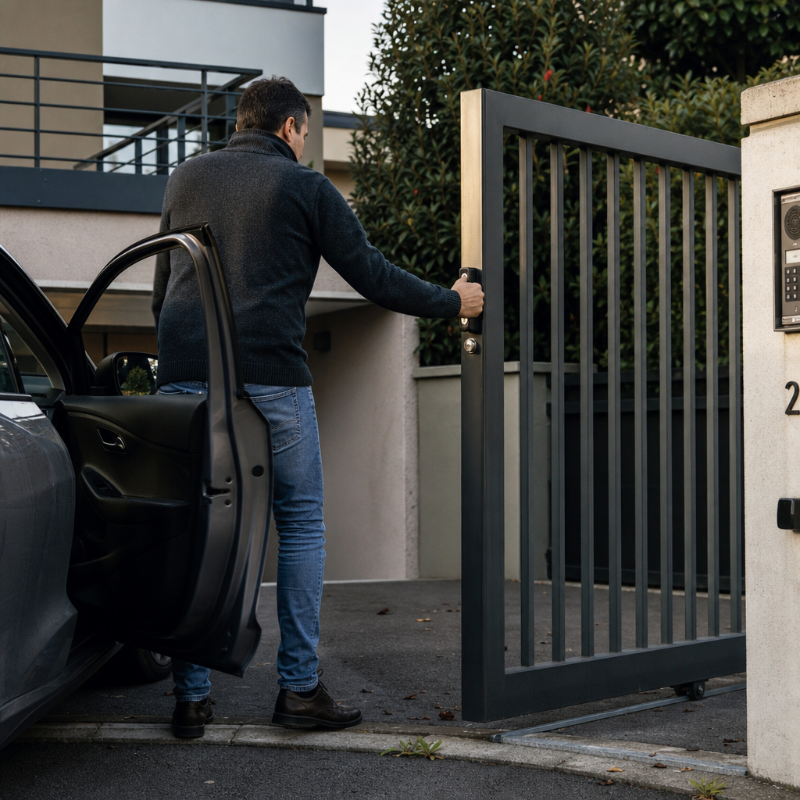
As the condition progresses, other signs become more noticeable. A swing gate may begin scraping one corner of the driveway, while a sliding gate develops rough spots where it hesitates or binds along the track. Uneven gaps appear between the gate and the receiving post, and the alignment that once looked square gradually starts looking off every time the gate closes.
The operator usually provides additional clues. It may sound louder than it used to, slow down during certain portions of its travel, or occasionally stop and retry the cycle after sensing extra resistance. Fault codes that never appeared before begin showing up intermittently, even though the operator itself may still be functioning properly. Often, the operator is simply reacting to increased structural resistance elsewhere in the system.
In Northern Nevada, winter weather often makes these problems more noticeable. Cold temperatures reduce lubrication efficiency, frost movement affects post alignment, and seasonal expansion and contraction change how components fit together throughout the day. A gate that works reasonably well on a warm afternoon may struggle during a freezing morning, making the problem seem inconsistent even though the underlying structural issue remains the same.
On commercial properties, apartment communities, and industrial facilities, people naturally begin working around the problem. Gates get forced closed, left open during busy periods, or cycled repeatedly until they latch. Over time, those workarounds place even more stress on the system while reducing the level of security and access control the gate was intended to provide. By the time these habits become routine, the gate is often signaling that it’s time for a closer structural evaluation rather than another adjustment.
Why This Comes Up in Automatic Gate Evaluations
Questions about gate sag usually come up after a property owner notices the gate scraping the driveway, missing the latch, or causing repeated operator problems. The symptoms are easy to see, but the reason behind them often isn’t. What appears to be an operator issue may actually be a structural problem that has been developing for years.
This is one of the reasons gate alignment is such an important part of a professional automatic gate evaluation. Throughout Reno and Northern Nevada, changing seasons, freeze-thaw cycles, wind exposure, and soil movement all influence how a gate performs over time. A gate that operated well for years may slowly fall out of alignment as its posts settle or its frame absorbs thousands of operating cycles.
In other situations, the gate itself may have been designed for manual operation before an automatic operator was added later. The gate may have worked adequately as a manually operated system, but the repeated force of automatic cycling exposes structural weaknesses that weren’t noticeable before. The operator isn’t necessarily creating the problem—it is simply revealing the limitations of the existing gate.
This is why experienced gate evaluations focus on the entire system rather than the operator alone. The gate frame, hinges, posts, foundations, alignment, hardware, and operator all work together. Looking at only one component often results in treating the symptoms instead of addressing the cause.
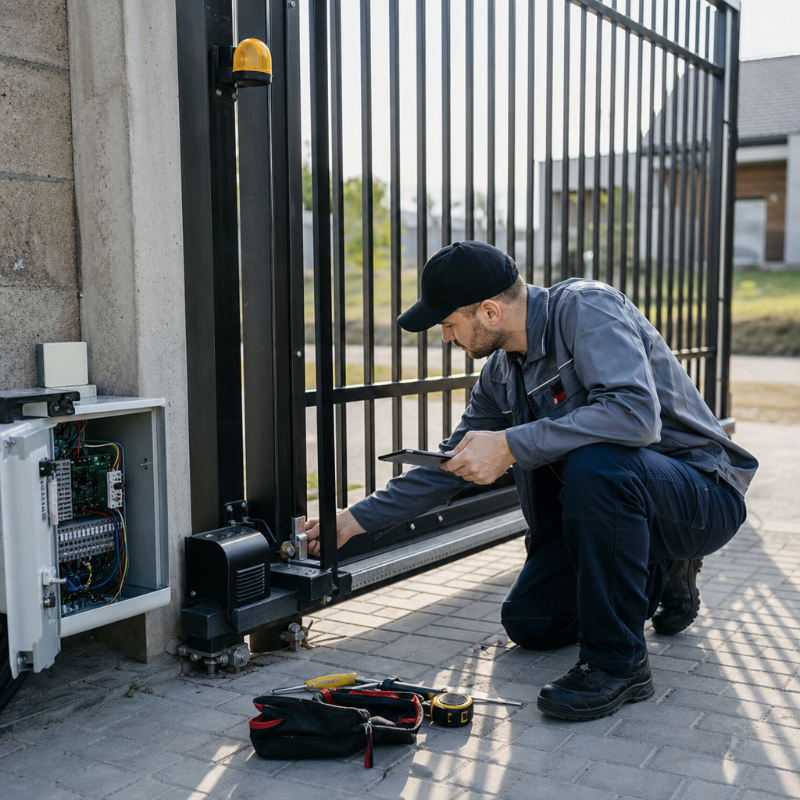
Understanding what actually causes gate sag helps property owners make more informed decisions about repair, reinforcement, or replacement. In many cases, correcting the underlying structural issue restores reliable operation without replacing components that are still in good condition.
Seeing Sag as a Signal, Not Just a Symptom
Gate sag is rarely an isolated problem. More often, it is an indication that the structure has gradually changed under years of weight, movement, weather, and daily use. Throughout Reno, automatic gates operate in conditions that include freezing winters, strong seasonal winds, changing soil conditions, and heavy commercial traffic. All of those factors influence how long a gate remains properly aligned.
Recognizing sag as an early warning sign instead of simply an inconvenience changes how maintenance decisions are made. Addressing alignment, structural support, and hardware wear before the operator begins struggling can often prevent larger repairs later. Waiting until the gate no longer opens or closes consistently usually means additional components have already been affected.
Automatic gates are designed as complete systems, not as individual parts working independently. Long-term reliability depends on the gate structure being just as sound as the operator driving it. When both are working together as intended, the system operates smoothly, places less strain on its components, and generally requires fewer unexpected repairs over its service life.
Zachary Thompson serves as A1 Fence LV’s dedicated automatic gate specialist and brings more than 25 years of hands-on industry experience across fabrication, installation, operator selection, access control integration, distribution, sales, and field instruction. His experience includes evaluating automatic gate systems for long-term durability, mechanical performance, and safety integration in Northern Nevada’s seasonal operating conditions. A1 Fence LV is a family-owned Nevada contractor founded in 2015 by Eli Maciel, who brings more than 35 years of industry experience. The company supports automatic gate projects throughout Northern and Southern Nevada with dedicated estimating, project management, and purchasing oversight.
If you are reviewing an automatic gate that is beginning to sag, bind, or place additional strain on the operator, understanding the condition of the entire system is often the best place to begin. For properties considering repairs, upgrades, or a new installation, submitting a quote request online is the simplest next step. You can request a quote at https://a1fencelv.com/request-a-quote. If you have questions about your site or would prefer to discuss your project directly, Zachary Thompson can be reached at (775) 451-3328 or zac@a1fencelv.com. A site-specific evaluation can help determine what makes the most sense for your property’s layout, operating demands, and long-term reliability.