Most automatic swing gate problems that look like operator failures actually start at the hinges. When a gate stops closing cleanly, drags on the ground, or forces the motor to work harder than it should, the root cause is often gradual hinge wear, sagging, corrosion, or misalignment rather than an electrical or mechanical issue with the opener itself.
Understanding how hinge condition affects the entire system helps explain why these problems develop and what to watch for on gates operating in Northern Nevada’s seasonal conditions. For property owners evaluating gate performance or planning repairs, A1 Fence LV approaches automatic gate work with this system-level perspective in mind.
How Hinges Function as the Foundation of Swing Gate Performance
An automatic swing gate depends on its hinges as the primary mechanical pivot that allows the gate leaf to swing open and closed while the operator applies force through an arm or linkage.
The hinges carry the full weight of the gate panel and absorb additional loading from wind, user forces, and the repeated motion of daily cycling.
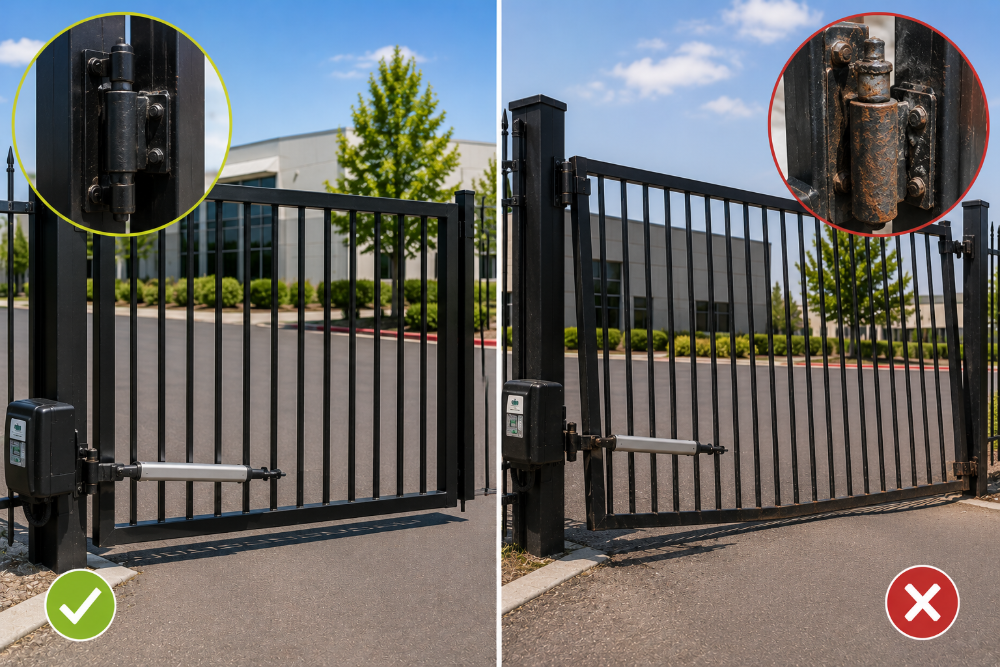
Because the operator connects to the gate at a fixed point, any change in hinge condition shows up as extra load on the motor. If the hinges loosen, corrode, or shift position, the gate’s swing path changes even when the operator still has full power.
This relationship means hinge problems rarely stay isolated. A small amount of wear or misalignment at the hinge translates into performance symptoms throughout the system. The gate may not reach its proper closed position, the latch may stop engaging reliably, or the operator may sound strained during cycles.
In Reno’s climate, hinges face seasonal stress from temperature swings, freeze-thaw cycles, moisture, and wind exposure. These conditions gradually affect hinge components over time, which is why gates that operated smoothly for years can slowly drift into inconsistent behavior.
For property owners, this means that what feels like an opener problem often has a mechanical explanation at the hinge level. Recognizing that connection is the first step toward understanding how automatic swing gates actually behave in real-world conditions.
Common Hinge Problems and How They Develop
The most frequent hinge issues on automatic swing gates include loosening hardware, wear at the pins and barrels, sagging, misalignment, rust and corrosion, and binding or sticking during movement.
Loosening happens because hinges carry continuous load and absorb repeated cycling forces. Over time, bolts and fasteners can work themselves loose, creating play in the hinge assembly. When you see visible movement at the hinge or hear grinding during operation, hardware loosening is often involved.
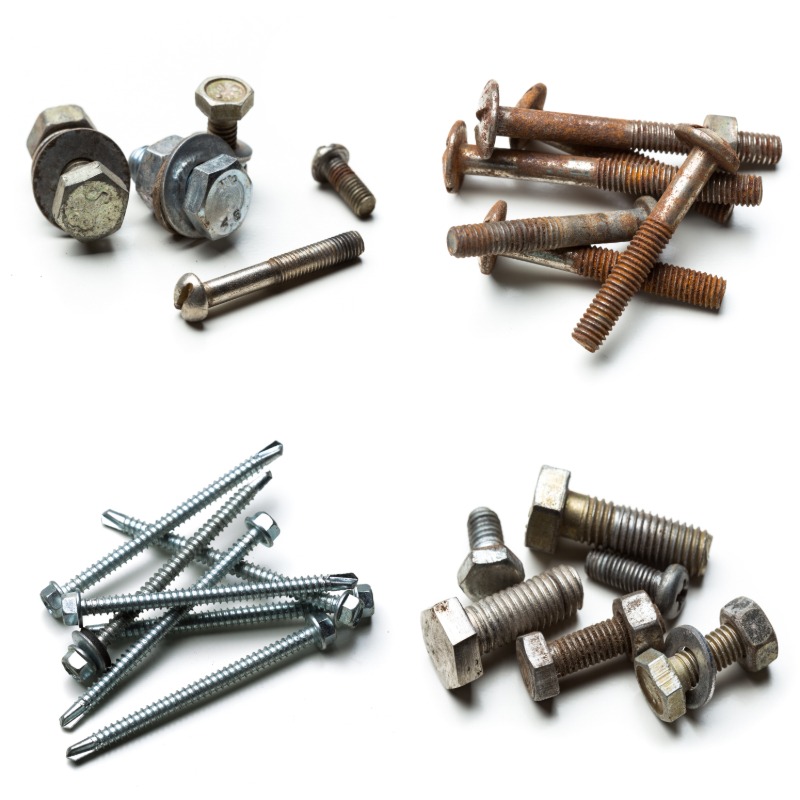
Sagging develops when hinges stretch or deform under the weight of the gate. This shifts the gate’s position so it no longer sits level. The bottom edge may start dragging on the ground, or the latch side may drop lower than the hinge side, changing how the gate meets at the center.
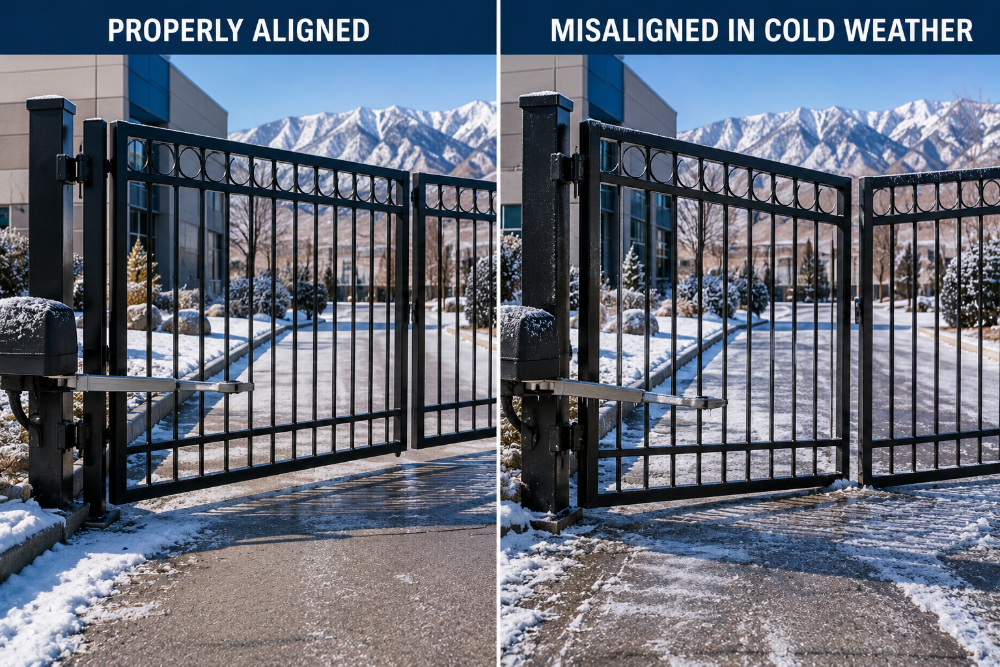
Misalignment can come from the hinges themselves or from movement in the hinge post. Even a small shift in post position transfers directly into hinge angle changes, which show up as uneven gaps, poor latch engagement, or one leaf sitting higher than the other.
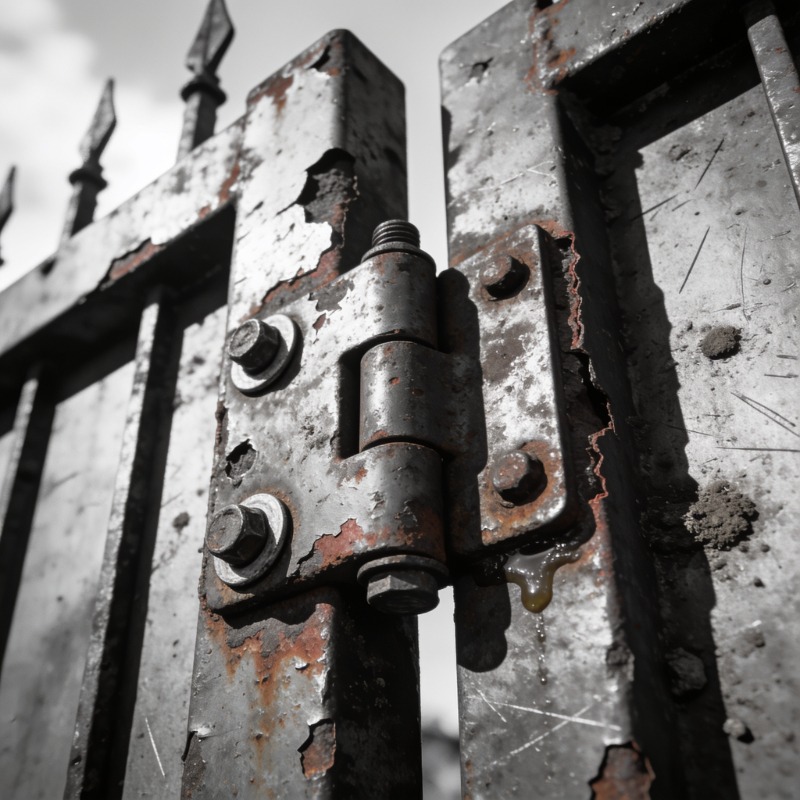
Corrosion weakens hinge components and increases friction. Rust is not just a cosmetic issue. It represents material loss that affects how smoothly the hinge moves and how long the assembly will hold up under load. In Northern Nevada, moisture from snow and seasonal weather supports rust development on exposed steel components.
Binding occurs when friction at the hinge increases to the point where the gate no longer swings freely. This forces the operator to push harder through each cycle, which accelerates wear on both the hinges and the motor.
What Hinge Problems Mean for Day-to-Day Gate Operation
For reliability, hinge condition governs whether the gate opens and closes the same way every time. When hinges are sound and properly aligned, the gate follows a consistent path and the operator runs smoothly. When hinges start to wear or shift, that consistency breaks down.
You might notice the gate hesitating partway through a cycle, stopping short of the latch, or requiring manual intervention to close completely. These symptoms often appear gradually, which can make them easy to dismiss until they become more pronounced.
Safety is affected because a gate that binds or sits out of alignment may not interact correctly with safety devices and limit settings. If the gate does not reach its expected position, sensors and stops may not function as intended. Misalignment can also encourage people to push or pull on the gate manually when it does not move as expected, which introduces additional risk.
Durability depends partly on hinge materials and sizing. Undersized hinges or standard steel hinges without adequate corrosion protection wear faster under continuous load and environmental exposure. Heavy-duty, galvanized, or stainless hinges typically maintain function longer, especially on gates that cycle frequently.
Long-term cost is influenced by whether hinge problems are addressed early or allowed to progress. A loose hinge that needs tightening is a minor maintenance item.
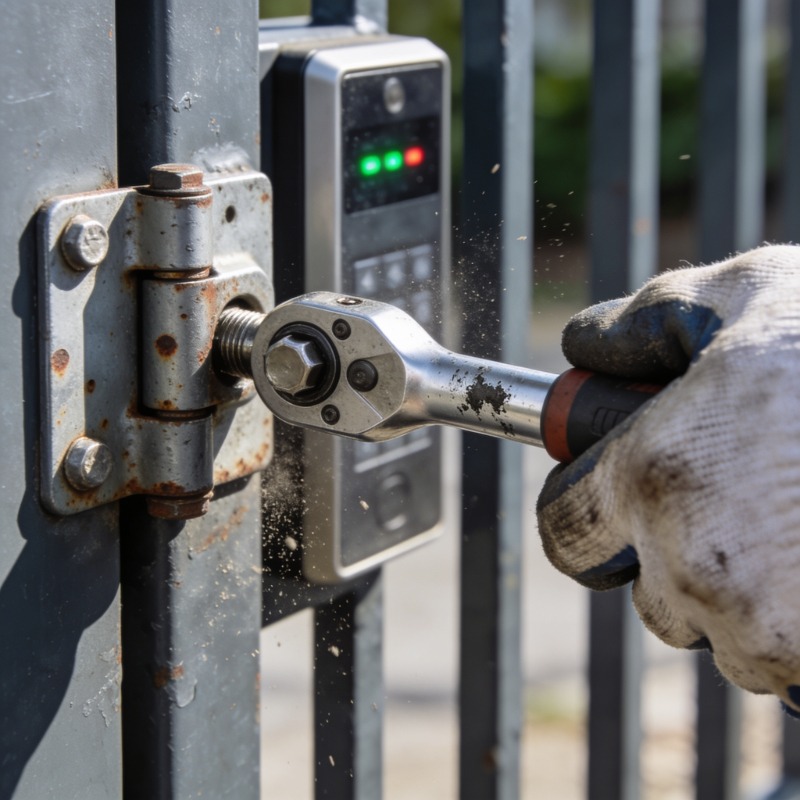
A sagging hinge that has stressed the operator, shifted the post, and deformed the gate frame becomes a larger repair. The interaction between components means that ignoring hinge issues often increases the scope of work needed later.
Usability is the most immediate concern for most property owners. Does the gate swing smoothly, close without dragging, and latch reliably? Or does hinge condition make daily use feel uncertain? Gates that stick, grind, or require extra attention erode confidence in the system over time.
Why Hinge Problems Are Often Misunderstood
Many property owners assume that if an automatic gate stops closing cleanly, the problem must be with the opener or the electronics. The operator is visible and complex, so it becomes the natural focus when something goes wrong. But hinge wear, sagging, and post movement are often the underlying mechanical causes of poor operation.
There is a common belief that once a gate is installed, its hinges will not need attention unless something obviously breaks. In practice, hinges are high-load components that naturally loosen, corrode, and drift over time. They require periodic inspection, tightening, lubrication, and sometimes replacement to maintain reliable performance.
Minor symptoms like gate drag or a latch that barely catches are frequently treated as annoyances rather than warning signs. These early indicators often signal alignment changes that will keep progressing if not addressed. What starts as a small inconvenience can develop into a more significant mechanical problem.
Some owners try to compensate for hinge issues by relying on operator force. The thinking is that if the motor pushes harder, it will overcome the resistance. In reality, increased force against worn or binding hinges accelerates wear throughout the system. The operator works harder, the hinges degrade faster, and the overall lifespan of the equipment shortens.
Rust on hinges is often dismissed as normal aging or a purely cosmetic concern. But corrosion is a functional problem. It increases friction, weakens structural integrity, and directly affects how the hinge performs under load. Treating rust as routine appearance wear misses its real impact on gate operation.
How Hinge Condition Connects to System-Level Performance in Northern Nevada
In Reno and surrounding areas, automatic swing gates operate through seasonal temperature swings, snow accumulation, freeze-thaw cycles, and wind exposure. These conditions place ongoing stress on hinge components that accumulates over years of service.

Cold weather affects lubrication. Grease and oil can thicken or dry out, increasing friction at the hinge points. Wind loading repeatedly stresses the hinges as the gate absorbs gusts while closed or resists movement during operation. Moisture from snow and seasonal weather supports rust development, particularly on hinges that were not specified with corrosion-resistant materials.
On a typical residential or light commercial automatic swing gate, hinge issues first appear as subtle changes. The gate no longer lines up perfectly. The latch starts to miss occasionally. You hear more squeaks and grinding as the gate moves.
As wear or misalignment progresses, the symptoms become more noticeable. The gate may drag on the ground, require more effort if moved manually, or cause the operator to hesitate and sound strained. In multi-tenant or shared access setups where the gate cycles frequently and users sometimes push on the panels, these problems can develop faster.
From a systems perspective, hinges, posts, gate structure, and operator all interact. A change at one point affects the others. This is why hinge health is one of the key indicators of whether an automatic gate will keep performing reliably over time. It is not just about the hinge itself but about how the entire system responds to gradual mechanical change.
Maintaining Perspective on Automatic Swing Gate Hinges
Looking at hinge problems as a core part of automatic swing gate behavior makes it easier to understand why alignment, rust, sagging, and binding matter as much as the opener itself.
Instead of viewing gate issues only through the lens of electronics or motors, seeing hinges as load-bearing, wear-prone components helps set more realistic expectations about the maintenance that comes with long-term gate operation.
Many of the everyday symptoms property owners notice in an automatic swing gate connect to slow changes at the hinge and post level, even when the operator still has plenty of power. Recognizing that connection supports better decisions about when to inspect, when to maintain, and when to address developing problems before they escalate.
For properties in Reno and Northern Nevada, where seasonal conditions place ongoing demands on gate systems, hinge condition is one part of the broader reliability picture. A1 Fence LV approaches automatic gate systems from this integrated perspective, evaluating how hinges, posts, operators, and access control components function together under real operating conditions. Zachary Thompson, A1 Fence LV’s dedicated automatic gate specialist, brings more than 25 years of hands-on experience evaluating automatic gate systems for long-term durability, mechanical performance, and reliable operation in Northern Nevada’s seasonal environment.
If you are considering repairs, upgrades, or a new automatic gate installation, submitting a quote request online is the simplest place to start at https://a1fencelv.com/request-a-quote. If you would like to discuss your property or project directly, Zachary can also be reached at (775) 451-3328 or zac@a1fencelv.com. A site-specific evaluation can help determine what makes the most sense for your property’s layout, operating demands, and long-term reliability.