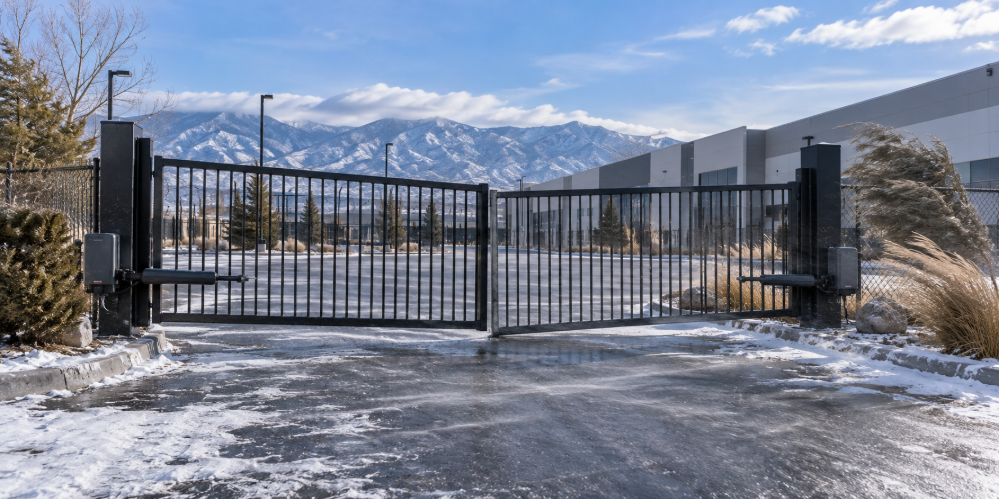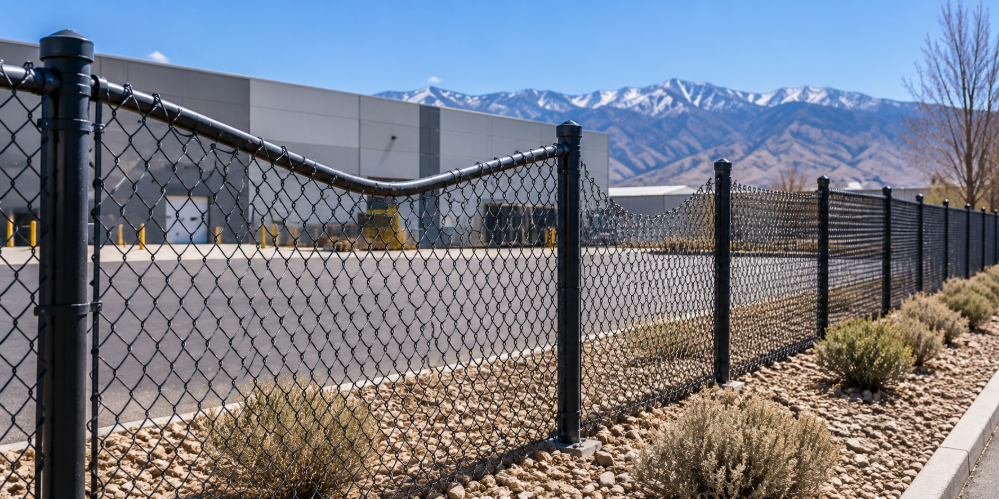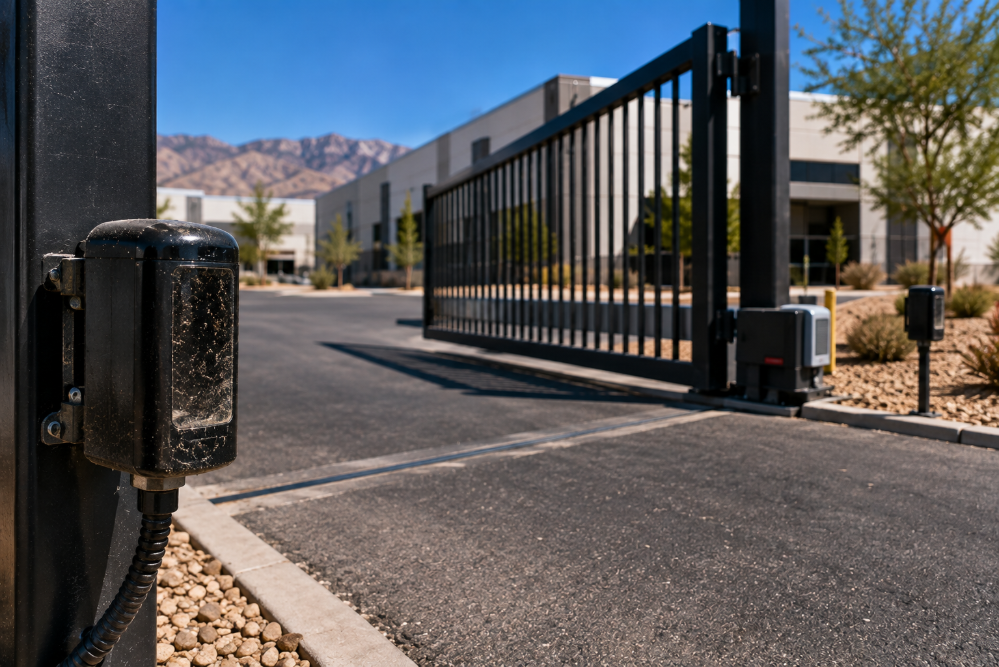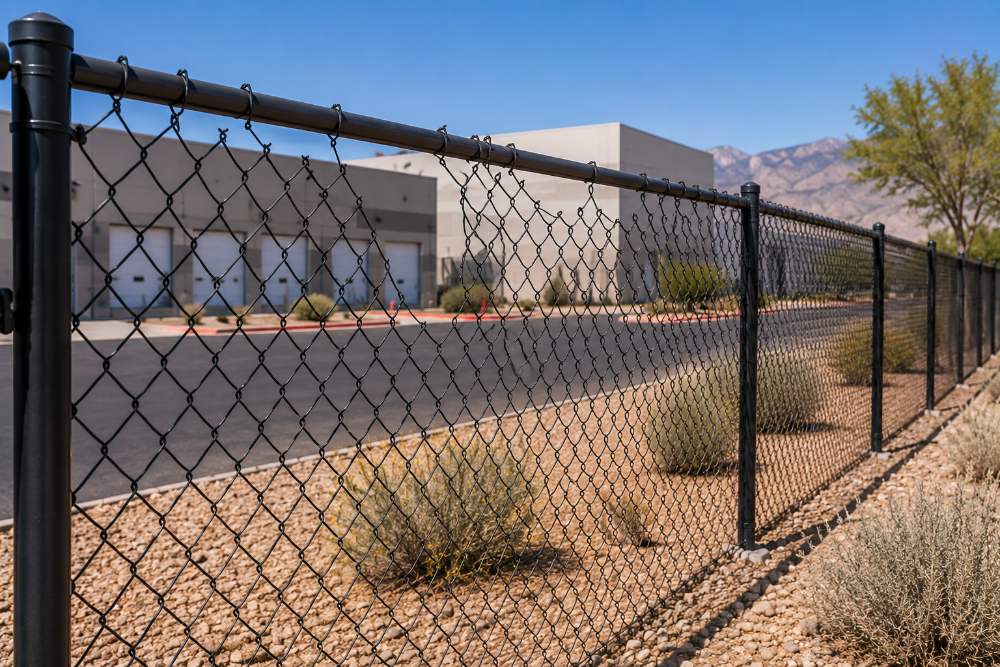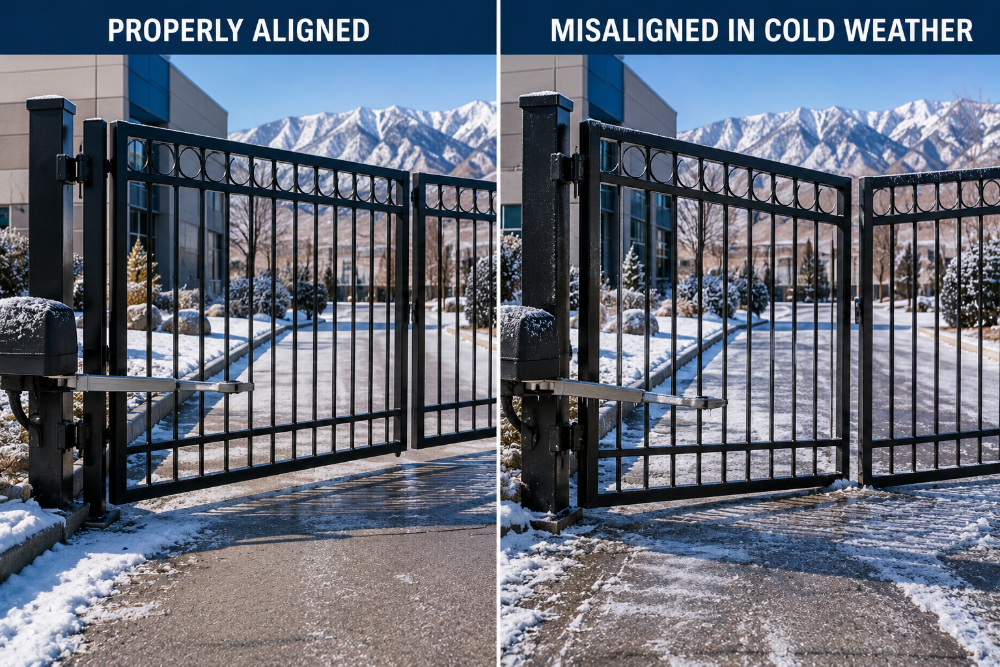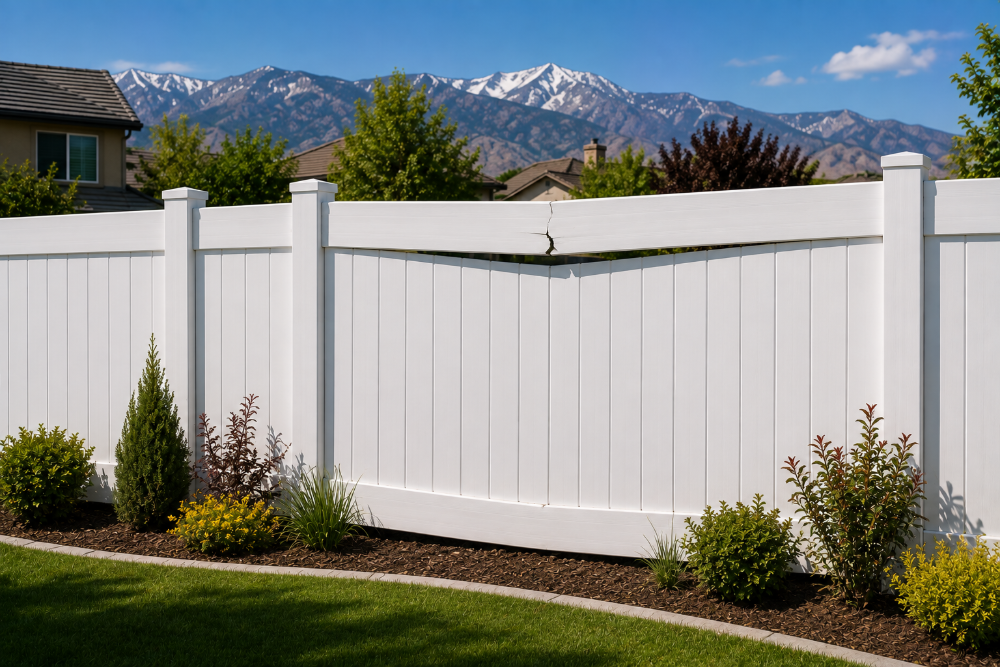
For commercial properties in Reno, the decision between handling fence repair in-house and bringing in a professional contractor comes down to long-term reliability rather than immediate cost savings. DIY repair can address limited, low-risk issues, but repairs affecting security, access control, or exposed fence runs typically benefit from a contractor that plans for snow, wind, and freeze-thaw movement.
The distinction is not about who holds the tools. It is about whether the repair will stay reliable through real-world conditions and operational demands on a commercial site. Understanding how fence and gate systems perform under Northern Nevada conditions helps clarify where each approach fits.
Why This Decision Matters for Commercial Properties
You may be looking at a damaged stretch of perimeter fence or a gate that no longer aligns and wondering whether your maintenance team can handle it between other priorities. At the same time, that fence is part of how you control access, manage liability, and keep operational areas separated from public or restricted zones.
The uncertainty is whether a quick fix will hold through the next winter, the next inspection, or the next period of heavy use. Or whether it will turn into a recurring issue that pulls time and attention away from other work.
On commercial sites, fence and gate repair is less about a one-time correction and more about how the repaired section performs through repeated cycles of weather and use. In Reno, that means exposure to snow loads, freeze-thaw movement, and wind along open runs or corners.
DIY repair typically means in-house staff replace or adjust visible components so the fence looks straight and functional again. The goal is getting the site operational quickly, such as re-hanging a gate that no longer latches or bracing a leaning section.
Professional repair approaches the same problem by looking at soil conditions, post depth, hardware sizing, and how loads move through the fence line when pressure is applied. That difference shows up in whether the same section shifts, sags, or fails again after another season, or continues to operate as part of the larger system.
For facilities teams and property managers, the practical question is not which approach costs less upfront. It is which approach reduces the likelihood of repeat calls, operational disruption, or surprises during inspections.
What Matters Most When Evaluating Repair Options
For commercial stakeholders, reliability means not having to revisit the same fence issue every few months or after each storm. When a repaired section fails again, it creates coordination problems, pulls maintenance resources from other work, and can affect how other trades operate on an active site.
Safety and risk come into play when a failed repair leads to an open perimeter, a misaligned gate, or an unsecured boundary between public and restricted areas. On properties with defined security zones, vehicle access points, or compliance expectations, the consequences of an improvised fix failing at the wrong time extend beyond the fence itself.
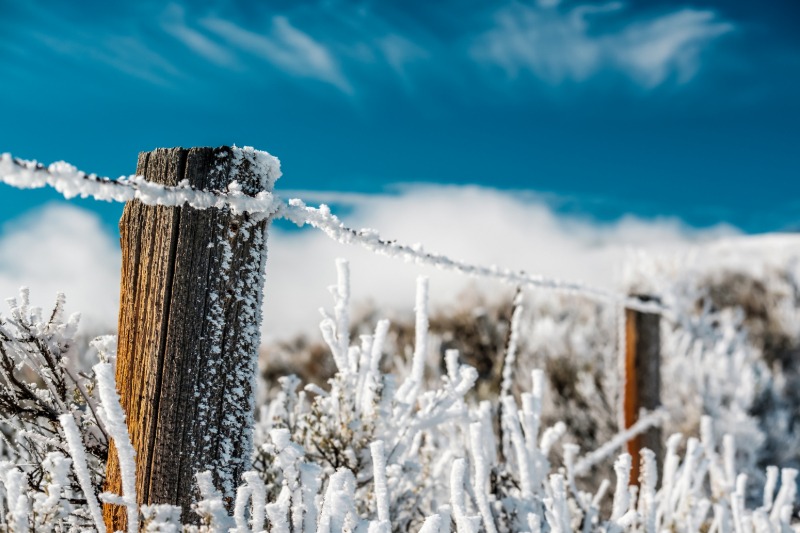
Durability is tied directly to how well the repair accounts for Reno’s freeze-thaw cycles, snow loads, and wind exposure. A post that was not set deep enough for frost conditions will heave. Hardware undersized for a heavy commercial gate will bind or fail. Fabric that was stretched but not properly tensioned will loosen.
Long-term cost is influenced by how often crews are sent back to the same location. It is also affected by potential disruption when access points fail unexpectedly and any knock-on effects when a temporary fix does not hold through a storm cycle or heavy use period.
Usability shows up in how smoothly gates swing and latch. It also shows up in whether the repaired section integrates cleanly into daily site operations without requiring workarounds or repeated adjustment.
Appearance still matters, but on commercial properties it is secondary to function. Where fence lines define a security or operational boundary, the visual outcome is less important than whether the system performs as intended.
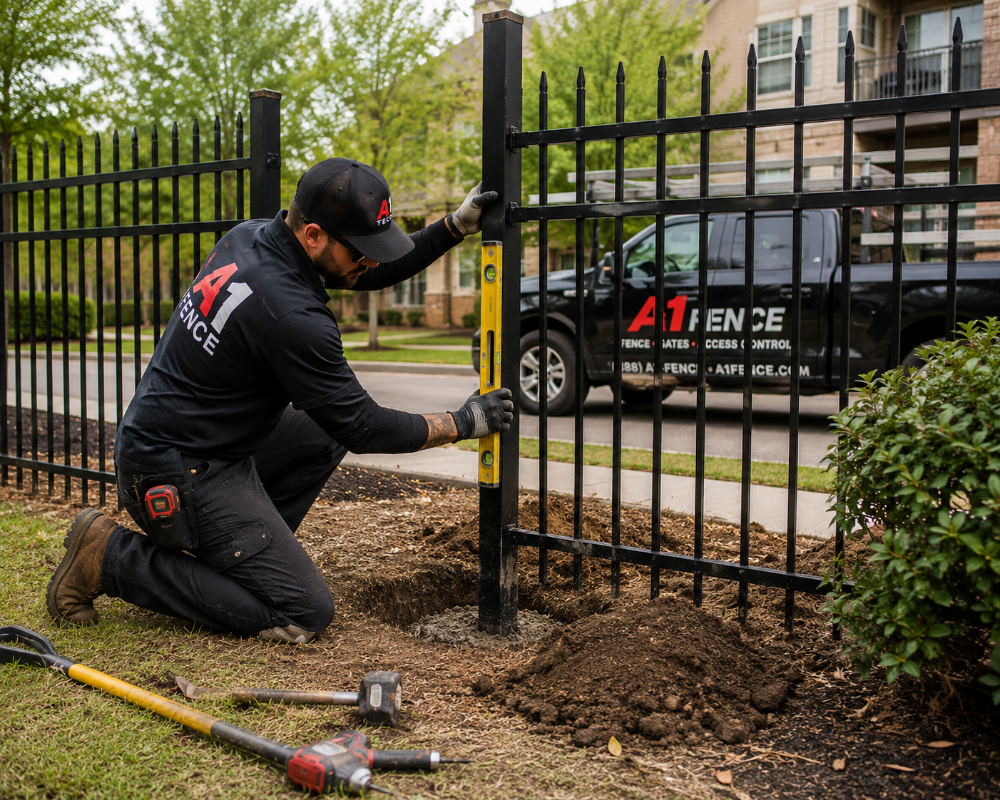
Some DIY fence repairs become more complicated when damaged posts have to be removed or reset. Before digging, property owners should have underground utilities located so they do not accidentally strike buried lines. The national 811 service recommends contacting 811 before starting any digging project.
Common Misunderstandings About Fence Repair
A recurring misconception is that if a fence is standing straight after a repair, the issue is fully resolved. This view can underestimate what is happening below grade or within the hardware connections.

Posts that were not replaced or reset to adequate depth will continue to move with frost heave. Hardware that was reused without inspection may be fatigued or corroded. Fabric that was pulled tight without addressing the tension system will loosen again under wind load.
Many teams also assume that matching visible materials is the main requirement. In practice, the unseen components and installation approach often determine how the fence performs through the next round of winter weather and heavy use.
There is a tendency to treat all fence repairs as equivalent, regardless of whether the section is decorative, defines a property line, or secures a loading area or equipment yard. The risk profile is different for each, and the repair approach should reflect that.
Another outdated belief is that once a damaged section is put back in place and looks aligned, the underlying cause has been addressed. Issues like poor footing depth, compromised posts, and misaligned gate hardware can reappear after the next storm cycle or heavy use period.
Professional contractors familiar with Reno conditions typically factor in these realities when planning repairs. In-house teams focused on getting a site functional again quickly may not have the same visibility into how the repaired section will respond through another season.
How This Shows Up in Day-to-Day Operations
In practice, DIY fence repairs often appear as braced posts, re-stretched fabric, or re-hung gates that work for a period and then start to drag, loosen, or lean again. This is especially common along exposed runs, at corners, and at high-traffic access points.
Facilities or maintenance teams may find themselves allocating time to repeated adjustments on the same sections. Over time, that pattern becomes visible in how often crews are called back and how reliably gates operate.
Professional repairs tend to focus on stabilizing the underlying causes rather than just correcting the visible symptoms. That might mean replacing a post rather than bracing it, upgrading hardware to handle the actual load, or adjusting footing depth to account for frost movement.
On active commercial sites, the difference shows up in whether the fence remains aligned with how the property is actually used. A gate that binds after snow accumulation or a fence section that leans after wind events creates operational friction that extends beyond the repair itself.
For commercial properties where fencing is tied to security, access control, or compliance expectations, a failed or improvised repair can create exposure around liability, unauthorized access, or conflicts with other site controls. Understanding which repairs are minor maintenance and which may affect safety or compliance helps clarify where in-house work makes sense and where outside expertise reduces risk.
Connecting This to Real-World Project Decisions
The choice between DIY fence repair and hiring a professional on a commercial site is primarily about performance over time rather than the immediate visual outcome. Seeing the repair as part of a larger system that has to work through snow, wind, and freeze-thaw cycles helps set realistic expectations about what a quick fix can deliver.
For general contractors, property managers, and facilities directors in Reno and surrounding Northern Nevada communities, these questions typically arise when dealing with damaged perimeters, misaligned gates, or legacy fence lines that have started to fail under current usage and weather conditions.
A1 Fence LV is a family owned Nevada fence company serving commercial properties throughout Reno and Northern Nevada. The company brings experience from large scale commercial work as well as familiarity with seasonal climates that include snow, wind, and freeze-thaw conditions. For teams evaluating repair options on a current or upcoming project, understanding how local conditions affect fence performance helps frame the decision in practical terms.
If you are coordinating a site plan or reviewing repair needs, you can request a quote online at https://a1fencelv.com/request-a-quote, call 775-451-3328, or email lalo@a1fencelv.com. Submitting the online request form is the simplest starting point for estimates.prop
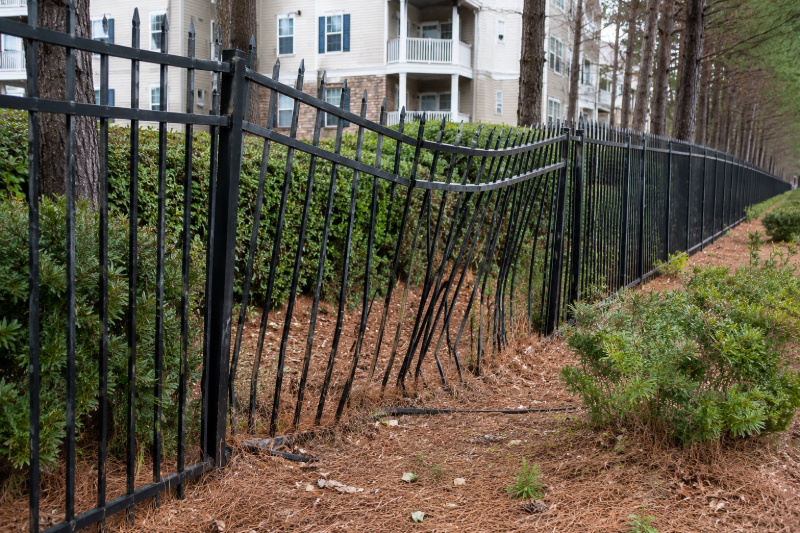
A leaning fence usually signals a structural problem that has been developing over time. The tilt itself is often the visible result of conditions that have been weakening posts, loosening connections, or shifting the ground beneath the structure.
In Reno and the surrounding areas, seasonal weather patterns play a direct role in how fences hold up year after year. Understanding what actually causes a fence to lean or fall helps homeowners recognize early warning signs and make more informed decisions about repair or replacement.
How Post Stability Breaks Down Over Time
The posts are what hold a fence upright. When they weaken or shift, the rest of the structure follows.
Wood posts are especially vulnerable in Northern Nevada because of how moisture and temperature interact below ground. Water seeps into the soil around the base, and when temperatures drop, that moisture freezes and expands. When it thaws, the ground contracts. This freeze thaw cycle repeats throughout the colder months and gradually loosens the grip the soil has on the post.
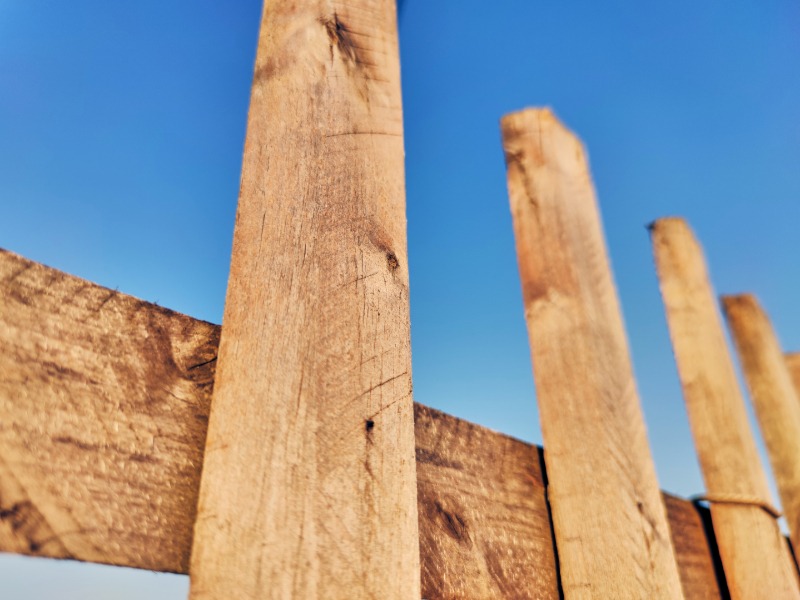
Over several seasons, that movement adds up. Posts begin to shift in their holes even if they were set correctly at the time of installation.
Concrete footings can delay this process, but they do not eliminate it. If water pools around the top of the footing or the concrete was not set deep enough, the same forces apply. The post inside may also begin to rot where it contacts the concrete if moisture becomes trapped.
Metal posts hold up better against rot, but they are not immune to movement. If the surrounding soil becomes unstable or was not compacted properly during installation, the post can still shift under repeated stress.
In most cases, a leaning fence started with a single weakened post. Once one post tilts, it transfers stress to the next one in line, and the problem spreads.
The Role of Wind and Load Pressure
Fences act as barriers. That means they catch wind, and in Reno, wind events can be sudden and sustained.
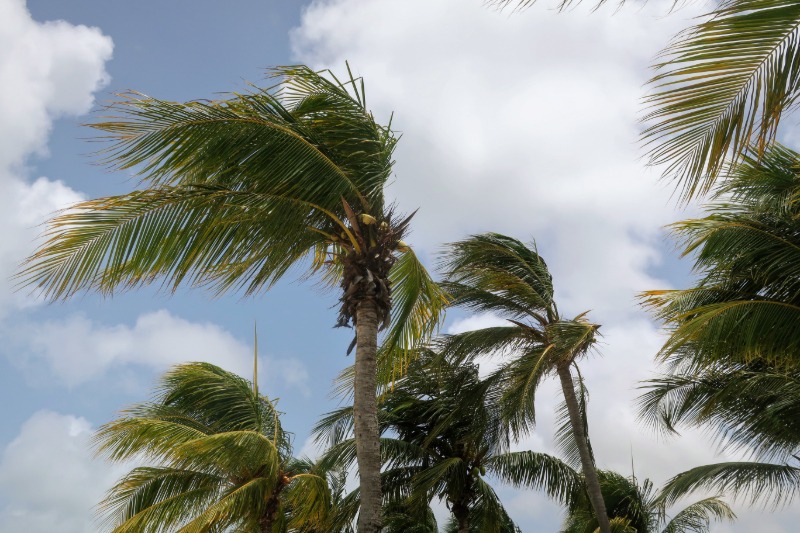
A solid panel fence with no gaps takes the full force of a gust. That force transfers directly into the posts, rails, and fasteners. Over time, repeated exposure weakens connections and puts lateral stress on the base of each post.
Fences with spacing between boards or pickets allow air to pass through, which reduces load. But even these designs experience strain when gusts hit at an angle or when debris presses against the surface.
Snow accumulation adds another layer of pressure. A fence that sits at the base of a slope or along a drift line may carry weight it was never designed to support. That weight pushes down on rails and pulls at post connections.
If posts were not set deep enough or were installed in loose soil, wind and snow pressure can accelerate the tilt. The fence may appear stable for years, then shift noticeably after a single storm.
Fasteners also play a role here. Nails and screws loosen over time as the wood around them expands and contracts. Once a few connections weaken, the entire panel becomes less rigid and more vulnerable to movement.
Soil Conditions and Ground Movement
What happens below the surface often matters more than what happens above it.
Reno sits in a region where soil types can vary significantly, even within a single property. Sandy or loose soil drains quickly but offers less structural support. Clay based soil holds moisture longer, which increases the risk of frost heave and expansion.
When posts are installed in unstable soil without adequate depth or anchoring, they are more likely to shift. The problem may not appear immediately. It often takes a few seasons of freeze thaw cycles or a particularly wet winter before the post begins to tilt.
Grading also affects how water moves around the fence line. If runoff pools near the base of posts, saturation weakens the surrounding soil and accelerates decay in wood components.
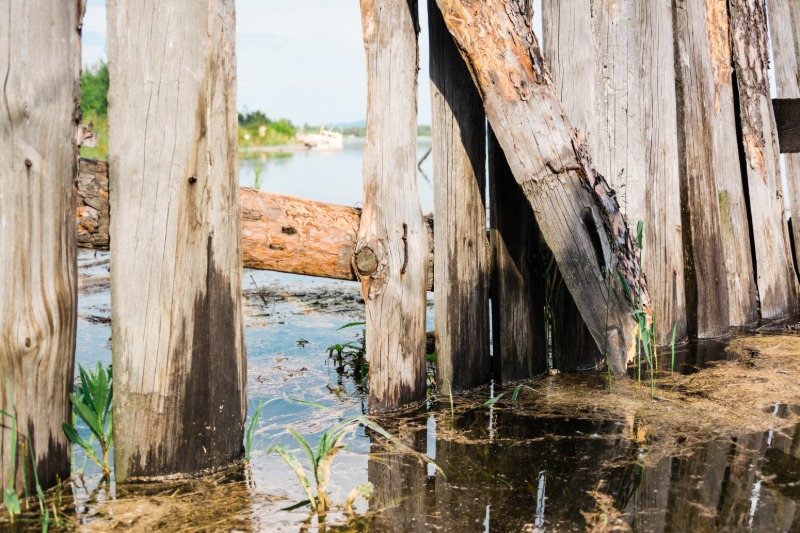
Tree roots can contribute as well. As roots grow, they push through soil and can lift or shift fence posts over time. This is more common in older installations where trees have matured near the fence line.
Ground movement is difficult to predict, but it is one of the most common underlying causes of fence failure. A post that looks stable at the surface may already be compromised below grade.
Material Wear and Structural Fatigue
Even when posts remain stable, the materials themselves degrade over time.
Wood fences in Northern Nevada are exposed to UV light, moisture, and temperature swings. These conditions cause the wood to expand, contract, crack, and eventually weaken. Untreated or poorly maintained wood deteriorates faster, but even pressure treated lumber has limits.
Rails that connect posts to panels bear much of the load. When they warp, split, or pull away from fasteners, the structure becomes less rigid. A fence with compromised rails may sway or flex under pressure that it once handled easily.
Vinyl and composite materials resist rot, but they are not immune to stress. Cold temperatures can make vinyl brittle, and impact damage is more likely during winter months. Composite materials may hold up better in moderate conditions but can still warp or fade with prolonged exposure.
Metal fences handle structural stress well, but joints and welds can weaken over time. Rust is less common in Reno’s dry climate, but it can develop where moisture collects or where coatings have been scratched or worn away.
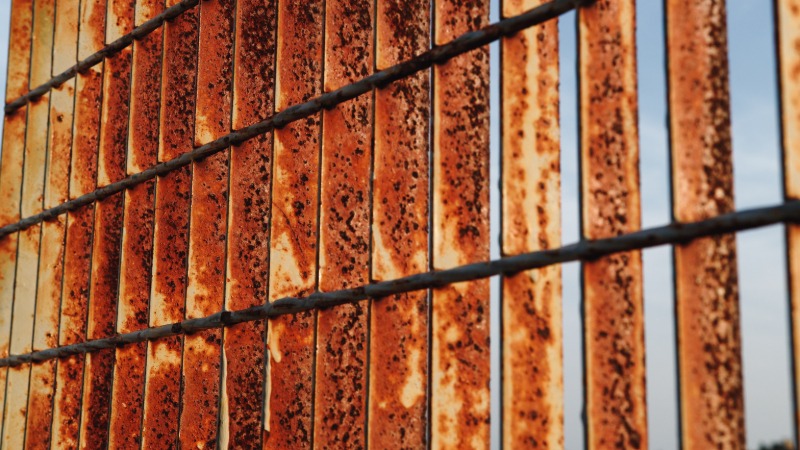
No material lasts forever. Long term durability depends on how well the fence was built, how it has been maintained, and how much stress it has absorbed over the years.
Recognizing the Signs Before a Fence Falls
A fence rarely falls without warning. The signs are usually visible well before the structure gives way.
Leaning is the most obvious indicator. Even a slight tilt suggests that something has shifted below the surface or that connections have weakened. The lean may worsen gradually or accelerate after a storm.
Posts that wobble when pushed are no longer secure. This can happen even if the fence appears straight. Testing posts by hand is a simple way to assess stability.
Gaps between rails and posts, or between panels and the ground, indicate movement. These gaps may appear seasonally as the ground shifts, or they may widen steadily over time.
Cracks in wood, rust on metal, or warping in vinyl are signs of material fatigue. These issues reduce the fence’s ability to handle stress and make failure more likely.
Addressing these signs early often allows for targeted repairs rather than full replacement. Waiting until the fence falls usually means more extensive work and higher costs.
Penn State Extension recommends inspecting fence posts for these conditions and resetting or replacing posts that can no longer provide stable support.
What This Means for Homeowners in Reno
Fence stability is not a one time consideration. It depends on how well the structure holds up under real conditions over multiple seasons. In Reno, that means accounting for freeze thaw cycles, wind exposure, snow load, and soil movement. A fence that performs well in its first year may begin to show problems after three or four winters. The causes are usually gradual, not sudden.
Homeowners who notice early signs of leaning, post movement, or material wear have options. Repairs may be possible if the damage is limited. In other cases, replacement makes more sense than repeated fixes.
A1 Fence LV works with homeowners throughout Reno and Northern Nevada to assess fence conditions and walk through practical next steps. Whether the issue is a single leaning post or a fence that has reached the end of its useful life, understanding the cause helps determine the right response.
If you are evaluating your options and want a second opinion, you can request a quote online at https://a1fencelv.com/request-a-quote, call 775-451-3328, or email joe@a1fencelv.com. Submitting the online request form is the simplest starting point for most estimates.