Installing an automatic gate on a Reno hillside requires more than selecting a powerful operator and calling it done. Slopes change how these systems handle load, how motors perform under stress, and how quickly components wear down over seasons. If you are planning an installation on uneven terrain, understanding how grade affects real-world performance helps you set realistic expectations for speed, maintenance, and longevity.
This guide walks through what actually happens when automatic gates operate on hills, and what that means for property owners evaluating their options. For broader context on automatic gate systems and how they integrate with property fencing, the considerations here connect directly to structural and access decisions you may already be weighing.
How Slopes Change the Way Automatic Gates Operate
Automatic gates on flat ground follow predictable physics. The operator moves the gate, the gate travels its path, and the system cycles without fighting external forces beyond wind and friction. On a slope, gravity becomes a constant factor the system must counter with every cycle.
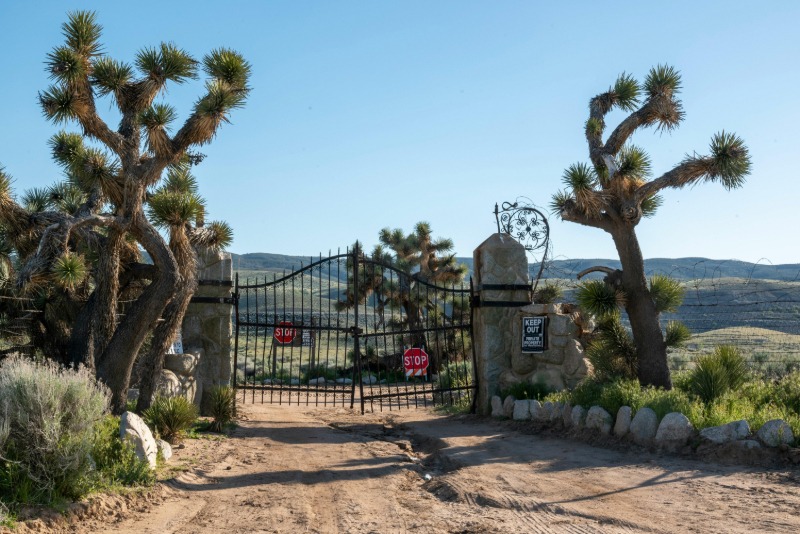
This is where choosing the right gate type becomes critical. On sloped properties in Reno, the decision between a swing gate and a sliding gate is not just preference, it is performance-based.
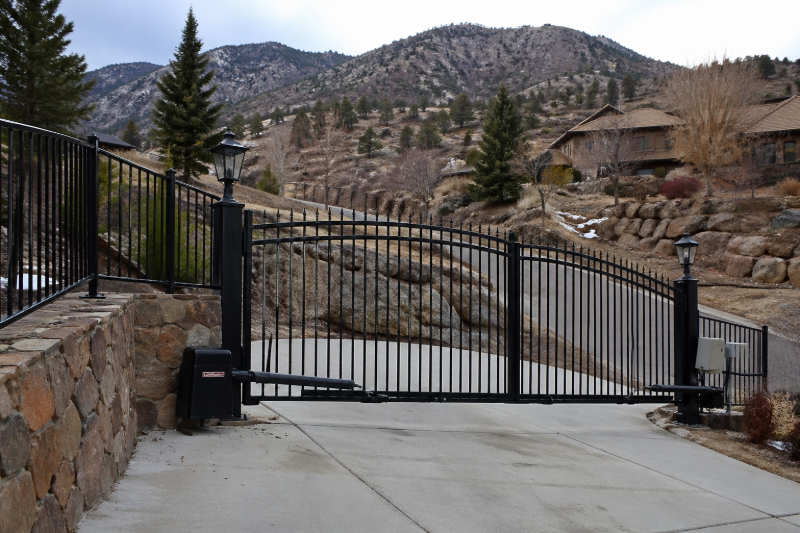
Swing gates on hillsides deal directly with gravity during every cycle. The gate naturally wants to fall downhill, which shifts more load onto the hinges and the operator arm. The top hinge ends up carrying more stress over time, and the operator has to work harder to push or hold the gate in position, especially when opening uphill. On mild slopes, this can be managed with proper sizing and setup, but as the grade increases, that constant resistance leads to more strain on the system and faster wear on moving parts.
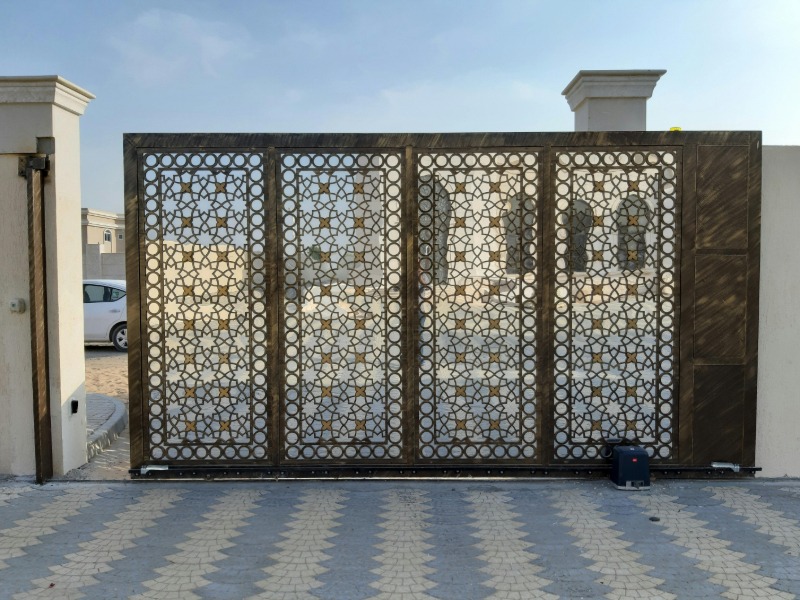
Sliding gates handle slope differently because the system depends on a level track, not the natural grade of the driveway. On uneven terrain, that means the installation has to compensate for the slope by extending and leveling the track independently of the ground. When that is done correctly, the gate moves consistently without fighting gravity the same way a swing gate does. When it is not, the gate starts to bind, hesitate, and wear unevenly along the track. Those issues show up as alignment problems that get worse over time if they are not corrected.
In both configurations, the operator works harder. That means slower cycle times, higher amperage draw, and more heat generation inside the motor housing. On moderate Reno slopes, you can expect open and close speeds to drop by ten to twenty percent compared to flat installations using identical equipment. This is also why operator strength, specifically torque, matters more in Reno than in flatter regions. A system that is technically rated for the gate weight may still underperform if it is not sized for the added resistance created by slope and environmental factors.
Dual-operator setups become more common on wider gates crossing uneven ground. Balancing the load between two motors prevents one side from lifting prematurely or lagging behind, which would otherwise cause alignment drift over months of operation.
Why Reno’s Climate Compounds Slope-Related Stress
Northern Nevada’s seasonal swings add a second layer of challenge to hillside gate installations. Cold winters, freeze-thaw cycles, and temperature differentials between day and night all affect how sloped systems perform over time.
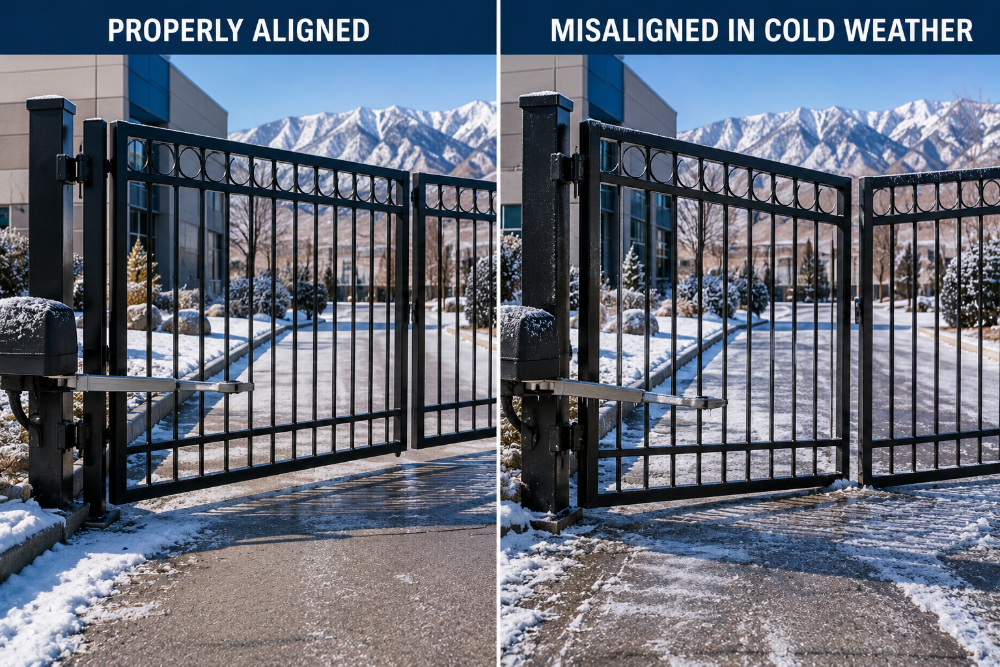
Soil movement is one of the less visible problems. Reno’s clay-heavy foothill soils expand when wet and contract as they dry or freeze. On a slope, this differential movement stresses post footings and anchor points unevenly. After two or three winter cycles, mounts that started plumb can shift enough to misalign sensors, bind hinges, or cause the gate to drag. When this happens in combination with an already stressed system, it accelerates wear and increases the likelihood of failure.

Motor performance also drops in cold weather. Battery backup systems lose roughly thirty percent of their capacity in freezing temperatures, which can strand a gate mid-cycle if the primary power fails during a cold snap. Operators draw more amps when cold, and thermal overload protection may trip if the motor is undersized for the combined demands of slope and temperature. This is another area where proper torque selection up front makes a difference in long-term reliability.
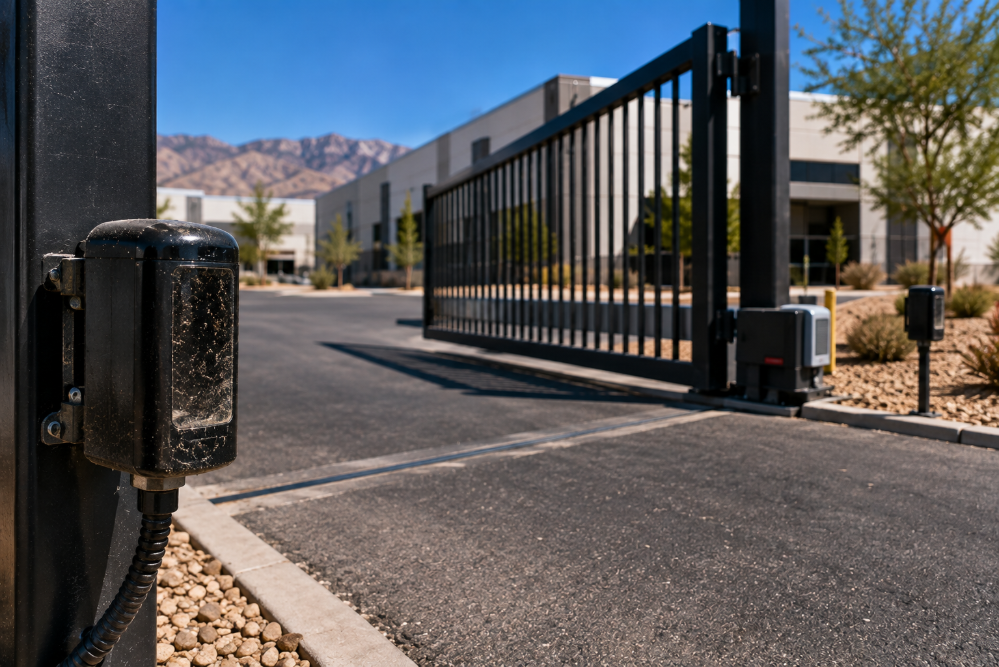
Sensors present another weak point. Photoeyes positioned on hillsides catch more runoff and condensation than those on flat ground. Fog, ice, and debris accumulation happen faster, leading to false obstruction signals that stop the gate when nothing is actually in its path.
These factors compound rather than replace the mechanical stresses of slope operation. A system that performs adequately on a fifteen-percent grade in mild weather may struggle or fail when that same grade meets a January cold snap.
Common Misunderstandings About Hillside Gate Performance
Property owners often assume that selecting a heavy-duty or commercial-grade operator solves slope-related challenges automatically. In practice, most factory specifications cap reliable performance at shallow grades, often around fifteen percent, without modifications.
Steeper installations may require custom gearing, counterweights, or upgraded arm assemblies that the base operator does not include. The label on the box does not always reflect what the system can handle on your specific site. If the system is undersized or improperly configured, it typically leads to premature motor failure as the operator constantly works beyond its intended capacity.
Another common assumption is that automatic gates are low-maintenance once installed. On flat ground, that expectation is closer to accurate. On slopes, maintenance demands roughly double. Debris accumulates faster in tracks positioned below grade changes. Hinges require more frequent lubrication because they bear uneven loads. Gear inspections become necessary twice a year rather than annually.

The idea of setting a system and forgetting it leads to premature failures on hillside installations. A gate that ran fine for the first year may begin sticking, reversing erratically, or overheating by year three if maintenance intervals remain calibrated to flat-ground assumptions. Many of these issues trace back to initial installation decisions that did not fully account for slope conditions.
Longevity expectations need adjustment as well. A well-maintained automatic gate on level terrain may last twelve years or more before major component replacement. On moderate slopes, that window often shrinks to seven to ten years, with repair costs ranging from five hundred to two thousand dollars when motor strain finally catches up.
What Hillside Performance Looks Like Day to Day
In daily operation, a properly installed hillside gate cycles slower and works harder than its flat-ground equivalent. You notice the motor laboring slightly on the uphill portion of the swing or slide. In winter, the pause before movement begins may stretch a few seconds longer as cold-thickened lubricants resist initial motion.
When systems are not installed correctly for slope conditions, the problems become more noticeable. Gates may fall out of alignment sooner than expected, tracks may wear unevenly, and operators may struggle to complete full cycles. These alignment issues tend to compound over time, especially when combined with soil movement and weather exposure.
Battery backup limitations become apparent during power outages. If the gate is mid-cycle when primary power fails and the backup battery is cold-soaked, the system may not complete its travel. Manual release becomes necessary more often than it would on a flat installation with the same backup capacity.
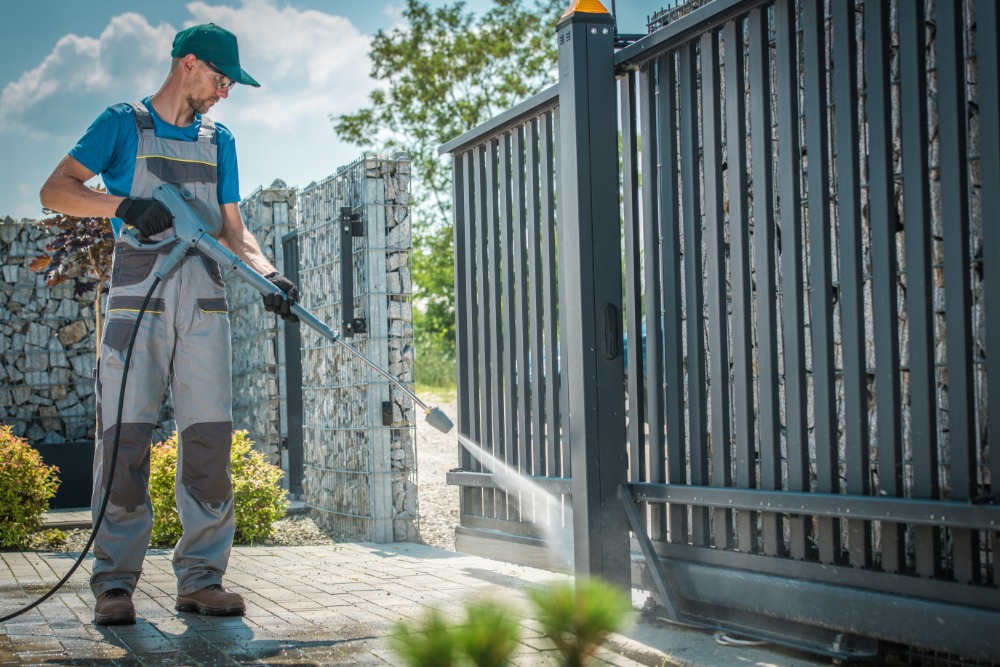
Track-based slide gates catch runoff debris after rain or snowmelt. Sand, gravel, and organic matter wash downhill and settle in the track channel, binding the gate if not cleared regularly. Monthly cleaning during wet seasons prevents the buildup that leads to motor strain and premature wear.
Swing gate hinges creak and resist movement when frost expands metal components overnight. Morning cycles in January may sound different than afternoon cycles after the sun has warmed the hardware. This is normal behavior, but it indicates the stress these joints absorb that flat installations avoid.
Safety systems require more attention on slopes. Momentum builds faster on a downhill swing, increasing risk if safety devices are not functioning properly. If installation or calibration is off, it can create real safety concerns during operation, especially in higher-traffic commercial environments.
Connecting Slope Realities to System Planning in Reno
Understanding how hills affect automatic gate performance shifts planning conversations toward site-specific evaluation rather than catalog selection. The grade of your driveway, the soil composition beneath your posts, and the seasonal temperature range at your elevation all influence which components make sense and how they should be configured.
This is why site-specific evaluation is critical in Reno. Two properties may look similar on paper but perform very differently depending on slope, exposure, and soil conditions. Without evaluating those factors up front, it is easy to end up with a system that technically works but struggles long-term.
Questions about hillside performance surface regularly during evaluations for gate repair or new installation. Property owners who have watched a system struggle through one Reno winter often want to understand whether the original installation accounted for slope at all, or whether upgrades could restore reliable operation.
Matching operator torque to actual grade, selecting the appropriate gate type for the terrain, anchoring posts against soil movement, and planning maintenance intervals around slope-accelerated wear are practical steps that separate installations built for real conditions from those that assume flat-ground defaults.
A1 Fence LV works with property owners across Northern Nevada on automatic gate systems where terrain, climate, and long-term reliability intersect. With Zachary Thompson’s field experience across operator selection, fabrication, and access control integration, the focus stays on what holds up under actual operating conditions rather than what looks good on a spec sheet.
If you are evaluating options for a hillside gate or addressing issues with an existing system, submitting a quote request online at https://a1fencelv.com/request-a-quote is a practical starting point. You can also call (702) 904-5998 or email zac@a1fencelv.com to discuss what makes sense for your site.